The Nigerian government has signed a major contract with a United States–based public affairs and lobbying firm, DCI Group, as part of efforts to improve communication around its actions to protect Christian communities in the country.
The move comes amid growing concern in the United States over reports of religious violence in Nigeria, with lawmakers and advocacy groups repeatedly questioning the government’s response to attacks on Christian populations.
Documents filed with the U.S. Department of Justice show that the Nigerian government, acting through the Office of the National Security Adviser, Nuhu Ribadu, and represented by Aster Legal, entered into a $9 million agreement with DCI Group. The contract, which took effect on December 17, 2025, is set to run for six months, with a clause that allows for automatic renewal for another six months.
Under the terms of the agreement, DCI Group is expected to lead a strategic communication campaign aimed at engaging U.S. government officials, lawmakers, and policy influencers. The firm will work to present Nigeria’s efforts to protect its Christian population and to counter international criticism surrounding allegations of religious persecution.
The lobbying company is also tasked with helping sustain U.S. political and diplomatic support for Nigeria’s broader security campaign against extremist groups and other destabilising forces operating across West Africa.
Financial records attached to the filing indicate that the Nigerian government made an initial payment of $4.5 million to DCI Group on December 12, 2025, ahead of the contract’s official start date. The agreement outlines a monthly retainer of $750,000 to cover professional services and operational expenses. The full $9 million fee is structured in two instalments: one paid at the beginning of the engagement and the other due at the end of the six-month period.
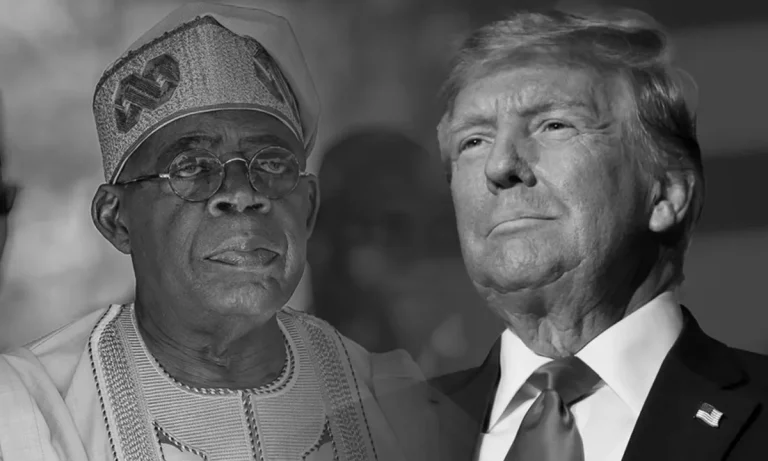
Nigeria’s decision to engage a U.S. lobbying firm follows heightened international scrutiny, particularly from Washington, over claims that Christians are being systematically targeted in parts of the country. Former U.S. President Donald Trump had previously redesignated Nigeria as a “country of particular concern,” citing allegations of widespread persecution of Christians a position that Nigerian authorities have consistently rejected.
In response to the designation, Nigerian officials have pledged to intensify diplomatic engagement with U.S. counterparts to challenge what they describe as a misleading narrative and to clarify the government’s ongoing efforts to address insecurity across religious lines.
Several U.S. lawmakers have continued to voice concerns over the safety of Christian communities in Nigeria, pushing for stronger international action. At different points, President Trump had even threatened possible military involvement as part of broader counter-terrorism efforts in the region.
However, the Nigerian government has maintained that dialogue, cooperation, and sustained security reforms remain the best path forward. Officials insist that the country is committed to protecting all citizens regardless of faith, while working with international partners to curb extremism and restore stability.