United States President Donald Trump has signed two new executive orders aimed at tightening the country’s birthright citizenship policy and cracking down on so-called “birth tourism,” following a Supreme Court ruling that struck down his earlier attempt to limit automatic citizenship for certain children born in the U.S.
The executive orders, signed on Thursday, represent the latest effort by the Trump administration to reshape U.S. immigration policy after the Supreme Court ruled in June that the administration’s 2025 attempt to restrict birthright citizenship was unconstitutional.
One of the newly signed orders broadens the categories of non-citizens whose children would not automatically qualify for U.S. citizenship at birth. Under the order, children born in the United States to two non-citizen parents would be denied automatic citizenship if one of the parents is identified as a member of a foreign terrorist organisation, an employee of a foreign government, an individual who attempted to obtain U.S. citizenship through fraud, or someone residing in U.S. territories where citizenship is not automatically granted under federal law.
The second executive order directly targets birth tourism—the practice of pregnant foreign nationals travelling to the United States to give birth so their children automatically become American citizens under the country’s long-standing birthright citizenship policy.
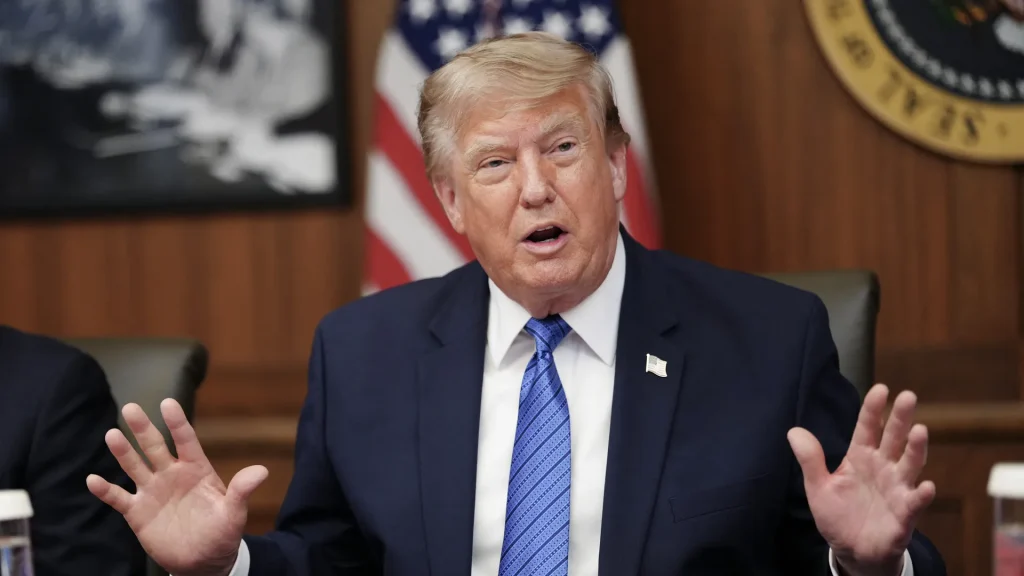
Speaking from the Oval Office after signing the orders, Trump defended the move, saying the measures were long overdue.
“This should have happened years ago, but we’re taking care of it now,” the president said, while criticising the Supreme Court’s decision that prevented his previous effort to end the 150-year-old policy.
In the first executive order, the administration argued that the measures were necessary to protect the United States from abuse of its immigration system.
“My Administration has guarded against the risks posed by malign foreign actors who attempt to swindle American citizens by taking advantage of the generosity of our Nation,” the order stated.
Trump and senior White House officials have repeatedly argued that birth tourism is being exploited by foreign nationals seeking to secure long-term immigration advantages for their families.
The president claimed that “hundreds of thousands” of children have been born through birth tourism in the United States.
However, estimates from the nonpartisan Migration Policy Institute suggest the actual figures are significantly lower. According to the institute, census-based estimates indicate that between 22,000 and 26,000 babies are born annually through birth tourism, while U.S. government data recorded approximately 9,600 births to mothers with foreign residential addresses in 2024.
White House Deputy Chief of Staff for Policy and Homeland Security Adviser Stephen Miller defended the administration’s decision, arguing that many foreign nationals misuse tourist visas to obtain American citizenship for their children.
“The idea is that people come here pretending to be tourists or visitors,” Miller said. “But the real reason they’re here is to have a child, make that child an automatic citizen, leave our country, and later benefit from all the rights and privileges reserved for Americans.”
According to Miller, those benefits include future access to government welfare programmes, voting rights once the child reaches adulthood, and other legal protections associated with U.S. citizenship.
He maintained that the president possesses the legal authority to restrict birth tourism under provisions of the Immigration and Nationality Act, which gives the executive branch powers to impose limitations on entry into the United States.
The new executive actions come after Trump’s earlier effort to restrict birthright citizenship through a 2025 executive order was challenged in court.
That order sought to reinterpret the 14th Amendment of the U.S. Constitution, which has, for more than 150 years, guaranteed citizenship to nearly everyone born on American soil.
The legal dispute eventually reached the U.S. Supreme Court, which ruled in June that Trump’s earlier policy could not take effect because it conflicted with constitutional protections, leaving birthright citizenship intact.
Trump strongly criticised the ruling while announcing the latest executive actions.
“The Supreme Court made a bad decision—a very unfair decision,” he said. “Our country suffers because of it, and we’re ending it in a different way.”
The new executive orders are expected to face fresh legal challenges, with immigration advocates and constitutional experts likely to question whether the administration can achieve through executive action what the courts have already ruled unconstitutional. The outcome could set the stage for another major legal battle over the interpretation of the 14th Amendment and the future of birthright citizenship in the United States.