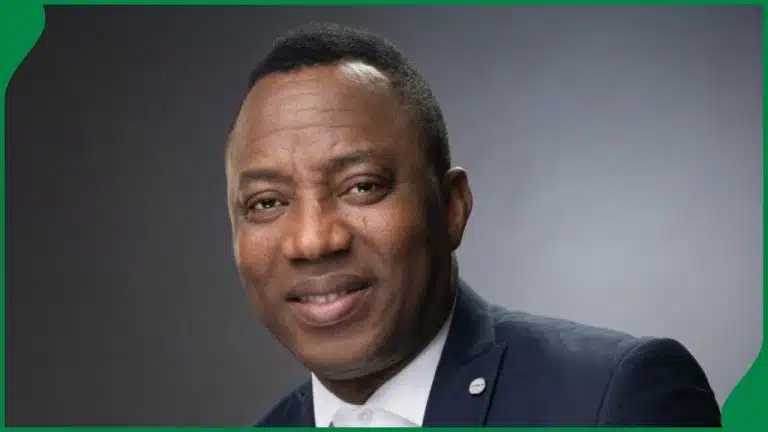
The African Action Congress (AAC) presidential candidate for the 2027 election, Omoyele Sowore, has said Nigerians should not be arrested or prosecuted for criticising President Bola Tinubu or using unflattering descriptions of him.
Sowore made the statement on Monday during an interview on Arise Television’s Prime Time, where he argued that freedom of expression is a fundamental right in a democratic society.
According to the AAC candidate, criticism of the President, including the use of insulting or unflattering language, should not automatically constitute a criminal offence.
“Criticising or calling President Tinubu names does not constitute an offence,” Sowore said.
He argued that an intelligence officer who orders the arrest of a citizen simply because the person criticised the President would be acting contrary to democratic principles.
Sowore said:
“If I were to be President and I heard someone had been arrested for criticising or calling me names, I would fire the intelligence officer because it means that the intelligence officer is not intelligent.”
The AAC presidential candidate also said Tinubu had previously stated that he did not want Nigerians arrested or prosecuted for insulting him.
“In fact, to be fair to Tinubu, and I want to say this for the first time, he has said it several times that he doesn’t want anybody arrested or prosecuted for calling him any name,” he said.
Sowore attributed the President’s reported position to Tinubu’s history of making strong political remarks about his opponents and other public figures.
“He knew why he said that. He used to do name-calling too. He’s called President dead meat. He’s called people all kinds of names,” Sowore said.
He maintained that democratic governance requires tolerance of opposing views and allows citizens to express their opinions about public officials.
“He knows that under a democratic system of government, you are not supposed to go after people because they are speaking their minds,” he added.
Sowore’s comments come amid ongoing public discussions in Nigeria over freedom of expression, criticism of public officials and the limits of criminal law in dealing with speech directed at political leaders.