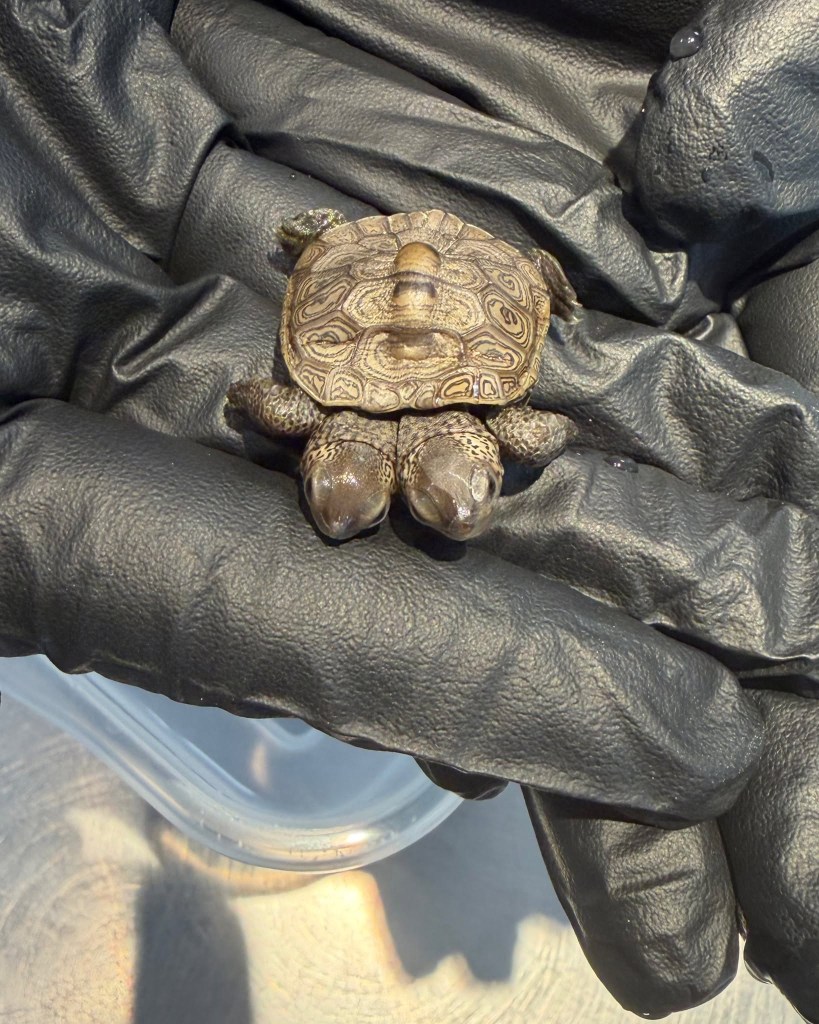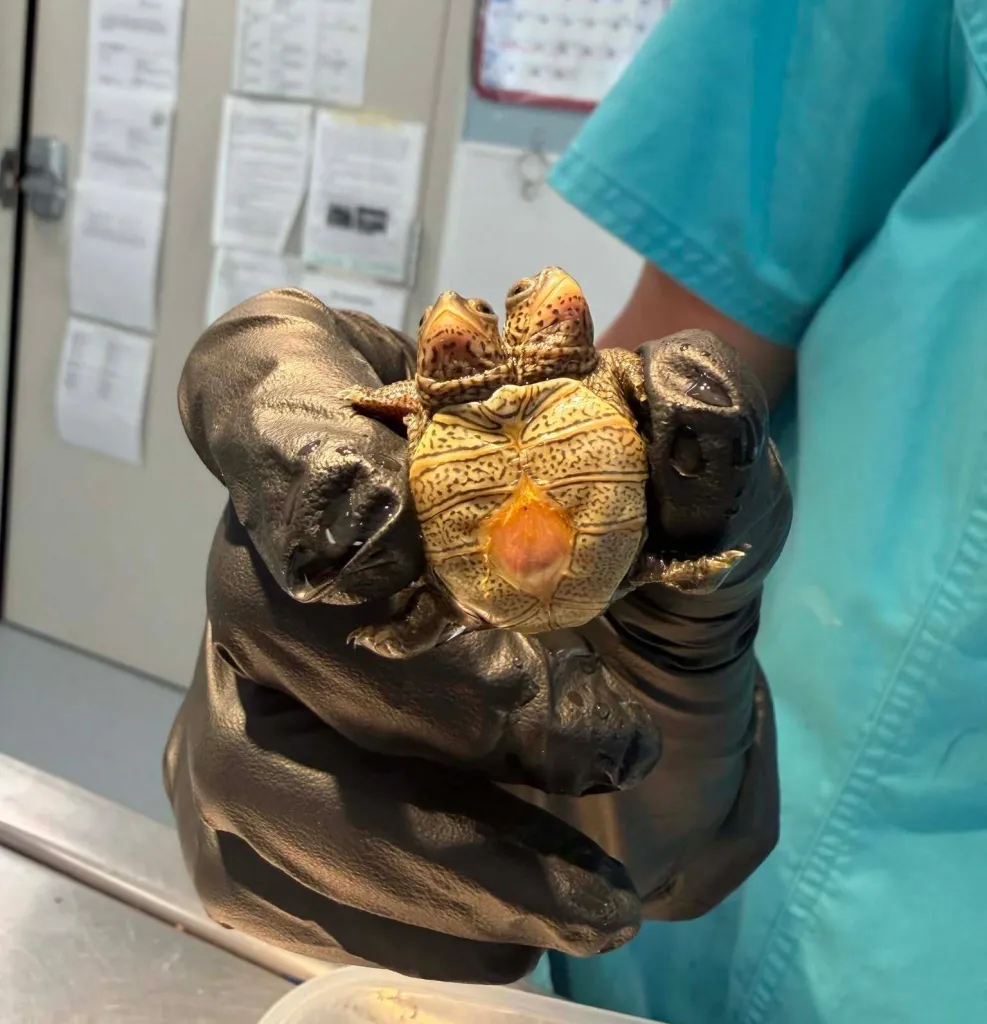
A rare two-headed diamondback terrapin has been discovered at a protected nesting site in Cape Cod, Massachusetts, in a highly unusual case that has attracted the attention of wildlife experts.
The tiny hatchling, which has two fully formed heads attached to a single body, was discovered last month in Wellfleet by representatives of the Mass Audubon Wellfleet Bay Wildlife Sanctuary.
The unusual turtle was later transferred to the Cape Wildlife Center in Barnstable on September 17 for specialist care.
Weighing only 0.18 ounces, roughly the weight of a nickel, the hatchling is being closely monitored by veterinarians because of the potential complications associated with its unusual anatomy.
The condition, known as bicephaly, occurs when a single embryo fails to completely separate during the development of identical twins, resulting in two heads sharing one body.
The Cape Wildlife Center said it had encountered only two other bicephalic terrapins over the previous five years, highlighting the rarity of the latest discovery.
“While we’ve encountered this unusual condition before, every case gives us another opportunity to learn more about these fascinating animals’ anatomy and physiology,” the centre said.
“For now, our team is monitoring this little one’s (two’s?) appetite, growth, and behaviour closely.”
Researchers say two-headed turtles can experience abnormalities involving the skull, face and spine and are often smaller than normal hatchlings.
Their unusual anatomy can also interfere with basic functions such as movement and feeding, potentially making survival more difficult.
A 2021 study examining two-headed and partially duplicated sea turtles highlighted some of the significant challenges faced by animals born with the condition.
Scientists believe bicephaly may be caused by a combination of genetic and environmental factors.
Zak Mertz, chief executive of New England Wildlife Centers, which includes the Cape Wildlife Center, said existing research suggests that both genetic and epigenetic factors could contribute to the condition.
“Our understanding based on the available research is that bicephaly is caused by both genetic and epigenetic factors,” Mertz said.
He explained that the condition could potentially be linked to the turtles’ relatively long lifespan, their tendency to return to the same nesting sites and a limited gene pool resulting from their conservation status.
Mertz also said environmental conditions could influence the development of the abnormality.
“It may also be influenced by environmental factors, such as the temperature, humidity during incubation, physical characteristics of the nesting sites, or potentially even things the parents are exposed to in the environment,” he said.
The unusual condition has also been documented in other wildlife species. Reported cases include a two-headed porpoise discovered off the coast of the Netherlands and a double-headed dolphin found on a beach in Turkey.
Researchers believe the rare hatchling could provide an opportunity to better understand developmental abnormalities and what they may reveal about the health of turtle populations and their habitats.
Diamondback terrapins live in brackish marshlands along the Atlantic and Gulf coasts of the United States, where freshwater and saltwater mix. The species is classified as threatened under the Massachusetts Endangered Species Act.
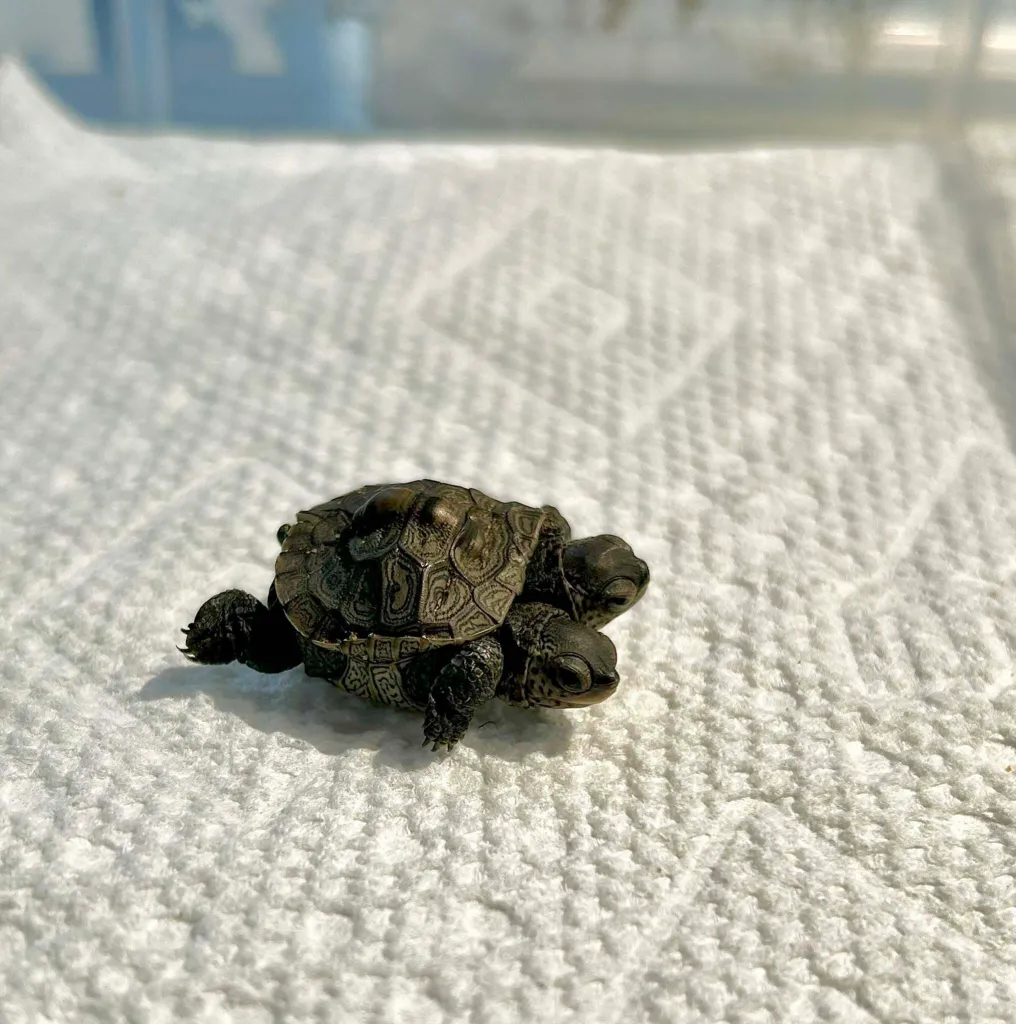
For now, veterinarians at the Cape Wildlife Center are continuing to monitor the hatchling’s feeding, growth and behaviour as they assess whether it can survive despite its unusual condition.
Mertz said the case could provide valuable opportunities for further research.
“It is fascinating and an area that certainly merits more study. We are excited to care for these two and learn as much as we can to inform future study in the process.”