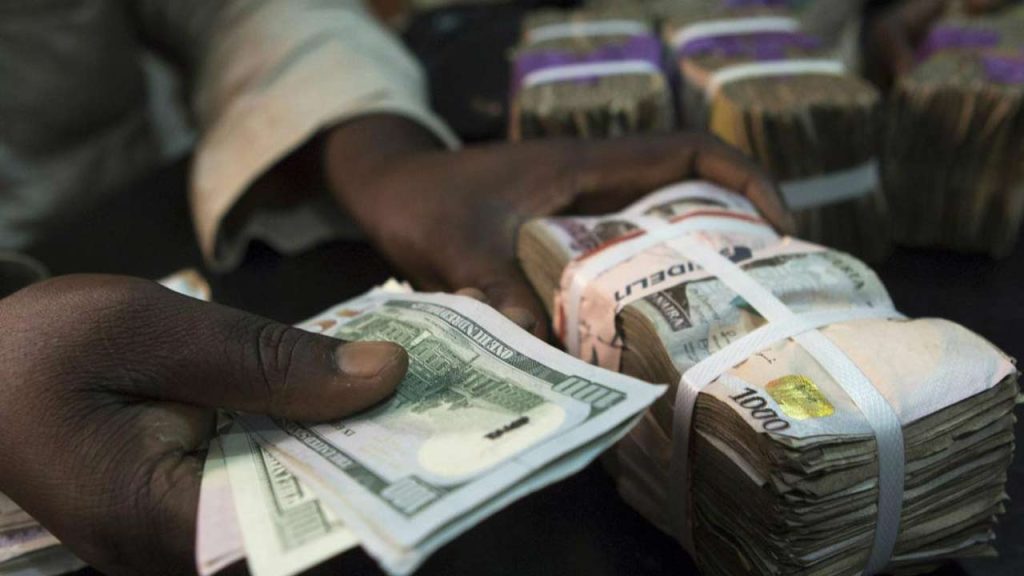
The Nigerian currency continued to trade within a narrow range against the United States dollar in the parallel market on Sunday, February 15, 2026, reflecting ongoing pressure in the country’s foreign exchange landscape.
Data obtained from Bureau De Change (BDC) operators in Lagos showed that the naira exchanged at ₦1,400 per dollar for selling and ₦1,375 per dollar for buying at the black market, commonly referred to as the “Aboki” market.
Parallel Market Snapshot (USD/NGN)
| Transaction | Rate |
|---|---|
| Selling Rate | ₦1,400 |
| Buying Rate | ₦1,375 |
Traders attributed the marginal fluctuations to persistent demand for dollars from importers, travelers, and individuals seeking foreign currency for international payments, amid limited supply in the informal market.
Official CBN Window Rates
At the official foreign exchange window monitored by the Central Bank of Nigeria (CBN), the naira traded within a tighter band:
| Category | Rate |
|---|---|
| Highest Rate | ₦1,358 |
| Lowest Rate | ₦1,353 |
The CBN continues to distance itself from activities in the parallel market, maintaining that it does not recognize the black market as part of Nigeria’s official forex system. The apex bank has consistently advised individuals and businesses seeking foreign exchange to process their transactions through licensed financial institutions.
Persistent Gap Between Official and Parallel Markets
The difference between the official and black market rates highlights the ongoing fragmentation of Nigeria’s forex market. Analysts say this disparity is largely driven by supply shortages, speculative demand, and structural challenges affecting dollar inflows into the economy.
Economic observers note that while recent reforms aim to unify exchange rates and improve liquidity, demand pressure still pushes many Nigerians to the informal market, where access to foreign currency is often faster but more expensive.
Important Notice for Forex Users
Exchange rates in the parallel market are highly volatile and may vary across locations, dealers, and transaction volumes. As a result, the actual rate at which individuals buy or sell foreign currency may differ from the figures quoted above.