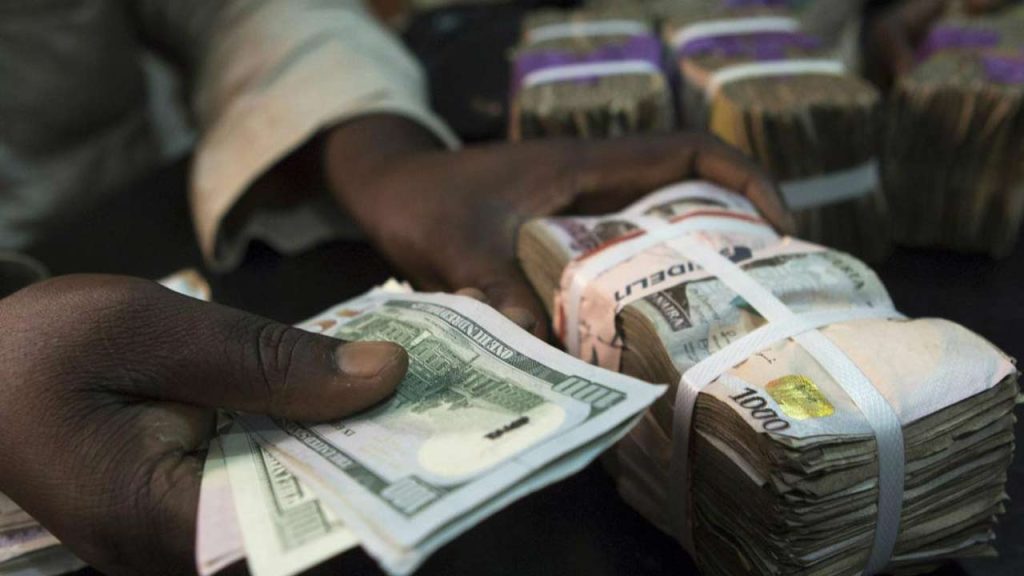
The naira continued to trade at a premium in the parallel foreign exchange market on Monday, February 16, 2026, as demand for the United States dollar remained strong among importers and individuals seeking forex outside official channels.
Black Market (Parallel Market) Rate
At the Lagos parallel market, commonly referred to as the “Aboki” market, Bureau De Change (BDC) operators quoted the dollar at:
| Dollar to Naira (USD/NGN) | Black Market Rate |
|---|---|
| Selling Rate | ₦1,400 |
| Buying Rate | ₦1,380 |
Traders said the rates reflected ongoing pressure on forex supply, with demand from small businesses, travelers, and import-dependent sectors continuing to outpace availability.
Official CBN Exchange Rate
Data from the Central Bank of Nigeria (CBN) showed that the dollar traded within a lower range at the official market:
| Dollar to Naira (USD/NGN) | CBN Official Rate |
|---|---|
| Highest Rate | ₦1,353 |
| Lowest Rate | ₦1,342 |
The gap between the official and parallel market rates highlights the persistent disparity between regulated forex windows and street-level demand-driven pricing.
CBN on Parallel Market Trading
The Central Bank has repeatedly stated that it does not recognise the parallel market, warning that individuals and businesses seeking foreign exchange should conduct transactions through authorised financial institutions.
The apex bank maintains that all legitimate forex dealings must pass through banks and licensed channels in line with its ongoing reforms aimed at improving transparency and stabilising the naira.
Why Rates Differ From What You See
Forex dealers note that:
- Prices can change multiple times within a single day due to volatility.
- Rates vary by location, transaction size, and negotiation strength.
- Urgent demand typically attracts higher selling prices.
As a result, the actual rate at which individuals buy or sell dollars may differ slightly from published figures.