A fresh amendment to Nigeria’s Electoral Act 2026 has ignited fierce debate across the country’s political landscape, following a controversial proposal by the House of Representatives to criminalise membership in more than one political party.
The amendment, which introduces a ₦10 million fine or up to two years’ imprisonment for offenders, comes barely weeks after the Electoral Act 2026 was signed into law by President Bola Tinubu.
Swift Passage Raises Eyebrows
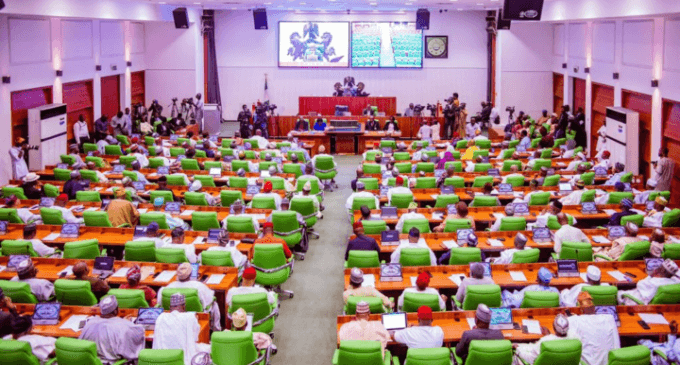
The proposed changes were passed rapidly during plenary, scaling first and second readings, committee consideration, and third reading within a single legislative session—an unusually swift process that has raised concerns among observers.
Spearheaded by House Leader Julius Ihonvbere, the amendment seeks to modify Section 77 of the Act by introducing three new clauses specifically targeting political party membership.
Under the proposal, individuals would be prohibited from belonging to more than one political party at the same time. Any such dual membership would be declared invalid, and the individual would lose recognition in all parties until their status is regularised.
More significantly, the bill criminalises the act, stating that anyone who knowingly maintains multiple party memberships commits an offence punishable by a hefty fine, imprisonment, or both.
Lawmakers Divided Over Constitutionality
The proposal immediately split members of the House, exposing sharp disagreements over its legality and implications.
While some lawmakers backed the move as necessary to curb political deception, others warned it could violate constitutional rights.
Abubakar Fulata, Chairman of the House Committee on University Education, argued that the amendment may conflict with Section 40 of the 1999 Constitution, which guarantees freedom of association.
He maintained that restricting individuals from associating with multiple political groups could amount to a breach of fundamental rights.
On the other hand, Deputy Speaker Benjamin Kalu defended the bill, describing dual party membership as a form of “fraudulent misrepresentation.” He insisted that politicians should align with parties that genuinely reflect their ideological beliefs.
Similarly, Jonathan Gaza supported the amendment, arguing that belonging to multiple parties at once is misleading and undermines political integrity.
Opposition Kicks Hard
The proposal has drawn strong condemnation from opposition figures, particularly within the Social Democratic Party (SDP).
The party’s 2023 presidential candidate, Adewole Adebayo, described the amendment as unconstitutional and a direct attack on democratic freedoms.
According to him, while electoral laws require candidates to be sponsored by a single party during elections, they do not prohibit individuals from belonging to multiple political associations.
He further accused lawmakers of pursuing narrow political interests, alleging that the amendment is designed to protect the ruling All Progressives Congress (APC) from internal instability.
Analysts Warn of Political Motives
Legal and political analysts have also raised concerns about the timing and intent of the bill, especially with the 2027 general elections on the horizon.
Public affairs analyst Maarcellus Onah suggested that the move may be driven by fears of mass defections from the ruling party amid economic challenges and declining public confidence.
He argued that rather than strengthening democracy, such legislation could be used to restrict political movement and limit competition.
Questions Over Democratic Fairness
The controversy has further fueled debate about the state of Nigeria’s democracy, particularly whether the political environment will remain open and competitive ahead of the next election cycle.
Critics warn that any attempt to restrict political association could undermine public trust and produce the opposite effect of what lawmakers intend.
Despite the dominance of the All Progressives Congress across many states and in the National Assembly, opposition voices insist that electoral outcomes ultimately depend on the will of the peoplenot political control.
As tensions continue to rise, the proposed amendment is expected to face intense scrutiny both within and outside the legislature, potentially setting the stage for legal challenges and further political confrontation in the months ahead.