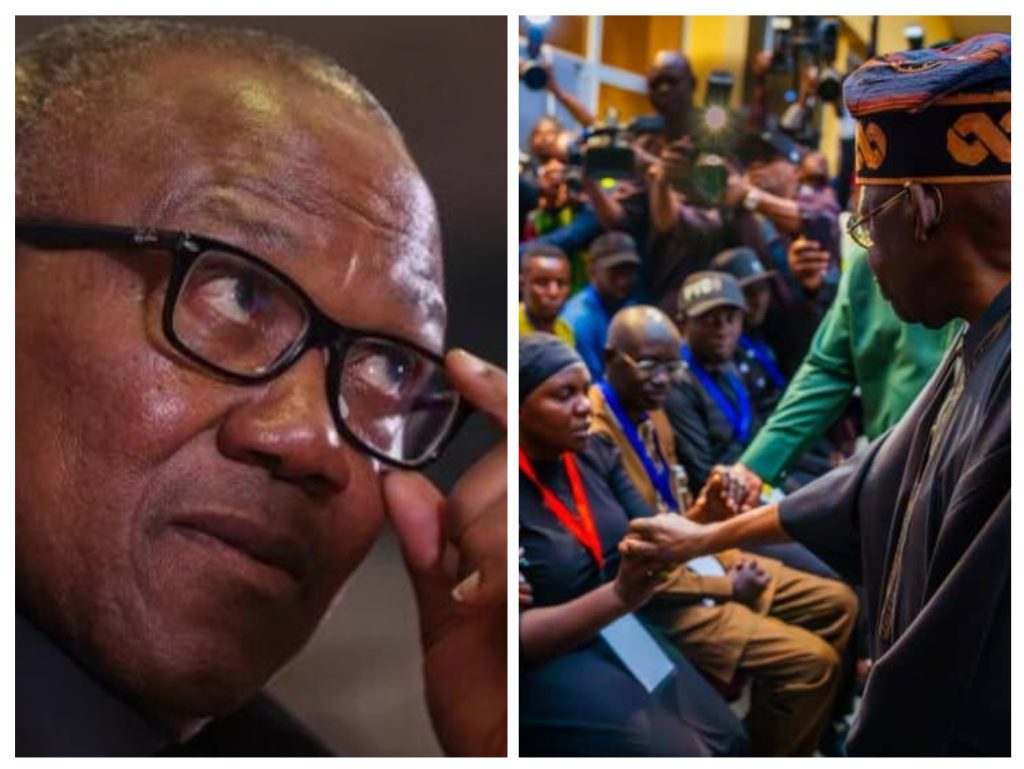
Former Labour Party presidential candidate, Peter Obi, has strongly criticised President Bola Ahmed Tinubu for meeting victims of the recent killings in Plateau State at the airport rather than visiting the affected communities.
In a statement shared via his X (formerly Twitter) account, Obi described the President’s approach as inadequate and reflective of a lack of compassionate leadership. He argued that engaging victims from an airport setting falls short of what is expected in moments of national tragedy.
According to the former Anambra State governor, true leadership demands physical presence at the scene of suffering, where victims and affected communities can feel seen, heard, and supported. He warned that distant engagements risk deepening the sense of neglect already experienced by citizens grappling with recurring violence.
Obi further referenced a similar incident during a previous visit to Benue State in June 2025, where President Tinubu reportedly stopped at the Government House without proceeding to the actual site of the attack. Drawing parallels, he noted that the President’s recent visit to Jos followed the same pattern, ending at the airport instead of the affected communities.
He stressed that for victims who have lost loved ones, homes, and their sense of security, symbolic gestures from a distance are insufficient. Instead, he called for leadership that is both visible and deeply engaged one that involves direct interaction with survivors, acknowledgment of their pain, and a firm commitment to ending insecurity.
Obi warned that such approaches could reinforce feelings of abandonment among citizens who have repeatedly endured violence without adequate protection or justice. He insisted that Plateau State deserves decisive action and a clear strategy to halt the cycle of attacks.
Presidency Explains Tinubu’s Decision
Responding to the criticism, the Presidency defended the President’s decision to meet victims at a facility near the airport.
In a statement issued by Bayo Onanuga, Special Adviser on Information and Strategy, the government cited logistical and operational constraints as the reason behind the arrangement.
According to the Presidency, the runway at Yakubu Gowon Airport lacks the necessary navigational equipment to support night-time operations. As a result, it would have been difficult for the President to travel into the city, visit affected areas, and return to the airport before nightfall.
The statement maintained that the decision was made with safety and timing considerations in mind, rather than a lack of concern for victims.
Growing Debate Over Leadership Response
The development has sparked broader conversations about the expectations of leadership during times of crisis, particularly in regions frequently affected by violence. While some support the government’s explanation, others argue that symbolic presence at the scene of tragedy carries significant emotional and political weight.