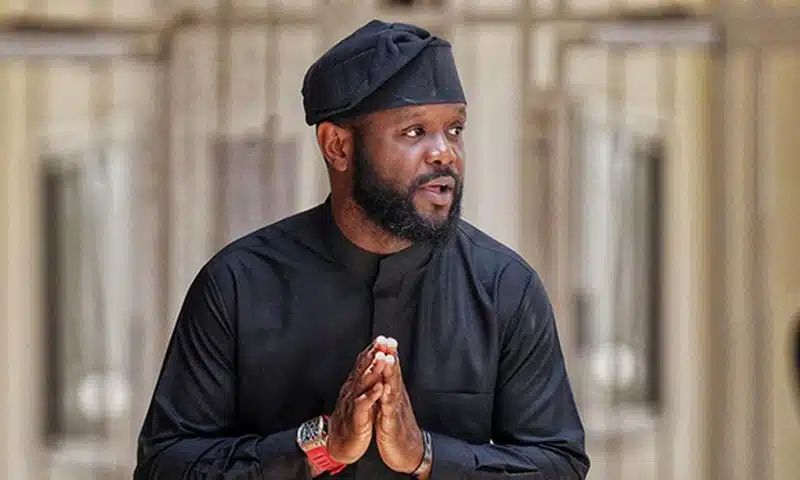
Seyi Tinubu, son of President Bola Ahmed Tinubu, has acknowledged the economic hardship facing Nigerians while defending his father’s administration’s policies, including the removal of the petrol subsidy and reforms to the foreign exchange system.
Seyi made the remarks on Monday during the inaugural Seyi Tinubu Colloquium held at Eko Hotel and Suites in Lagos.
Speaking at the event, he said every generation inherited a country with existing challenges but had a responsibility to make decisions that would improve the lives of future generations.
According to him, President Tinubu’s administration chose to confront Nigeria’s longstanding problems through policies intended to create better opportunities for younger Nigerians.
He identified the removal of the petrol subsidy, changes to the foreign exchange system and the restructuring of the tax system as key measures shaping the country’s economic direction.
Seyi admitted that the reforms had not been easy for Nigerians, particularly families struggling with rising living costs and stretched household budgets.
He, however, argued that although the immediate impact of the changes was painful, their long-term benefits might take time to become visible.
“President Bola Ahmed Tinubu did not choose Nigeria, did not choose the Nigeria inherited from his predecessors, yet his administration chose to confront the challenges of our nation, not for itself alone, but for the benefit of those who come next, for us, the young generation,” he said.
He added that the policies were aimed at addressing fundamental questions about how Nigeria generates revenue, manages its finances and creates economic opportunities.
“Removing the fuel subsidy, reforming the foreign exchange system and overhauling taxation are decisions about how Nigeria earns, spends and creates opportunities,” he stated.
Acknowledging the immediate difficulties associated with the reforms, Seyi said families had felt the impact even as the long-term improvements remained difficult to see.
“Changes have not been easy. Families whose budgets have been stretched, the pain was immediate, the lasting improvement more difficult to feel and touch, yet they are no less real,” he said.
He further stressed the importance of making long-term investments in infrastructure and public institutions, noting that decisions taken today could benefit generations yet unborn.
“A road built today will serve people who are still children. An institution strengthened today can protect opportunities for Nigerians yet unborn,” he added.
Seyi declared his support for his father’s economic reforms, arguing that the future inherited by younger Nigerians would depend partly on the decisions made by current leaders.
He also called on young people to participate actively in leadership and governance, stressing that they had a responsibility to ensure that decisions taken today would benefit the wider population in the future.
“That is why I also believe we have the responsibility to participate in the leadership and ensure that what is decided today will benefit all of us tomorrow,” he said.