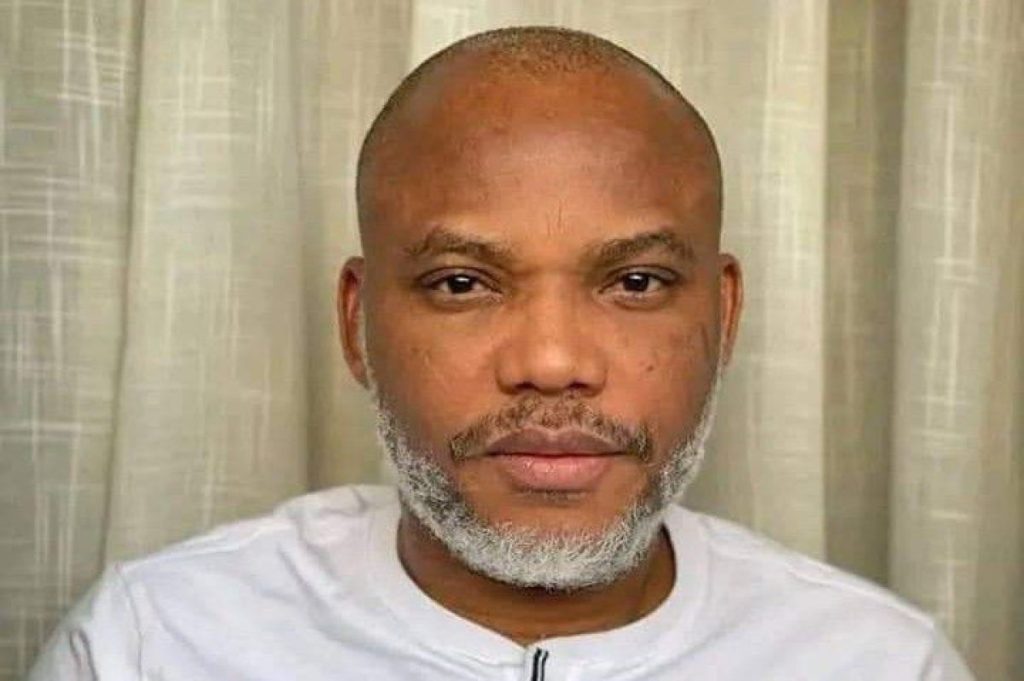
Prince Emmanuel Kanu, younger brother of detained Indigenous People of Biafra (IPOB) leader, Nnamdi Kanu, has claimed that his brother’s continued detention has caused greater damage to the Nigerian government than to the IPOB leader himself.
Prince Emmanuel made the assertion in a Facebook post on Sunday, describing the prolonged incarceration of his brother as a self-inflicted wound for the Federal Government.
He argued that Kanu’s continued detention has contributed to Nigeria’s loss of international credibility, worsening insecurity and economic challenges in the South-East, as well as the emergence of more radical separatist groups.
According to him, the Federal Government’s handling of Kanu’s case has raised questions about Nigeria’s commitment to the rule of law, particularly following his extraordinary rendition from Kenya and the subsequent Court of Appeal judgment that discharged him.
He maintained that the government’s refusal to comply with the appellate court’s decision had damaged Nigeria’s image before international observers, human rights organisations and potential investors.
Prince Emmanuel also linked Kanu’s detention to the prolonged Monday sit-at-home order in the South-East, alleging that the development had disrupted commercial activities, education and other aspects of daily life across the region.
He claimed that the situation had contributed to killings, fear and insecurity, forcing the government to commit significant resources to military operations in the South-East.
On the political implications of the detention, he argued that Kanu’s incarceration had increased sympathy for the IPOB leader among some Igbo people, including individuals who previously did not support the separatist movement.
He further alleged that detaining a leader who advocated a non-violent referendum had created a vacuum that was subsequently occupied by more radical groups.
In his words:
“When you jail the leader who was preaching non-violent referendum, you create a vacuum. That vacuum was filled by more violent and uncontrollable groups enforcing sit-at-home with guns. The government now has a bigger security problem than IPOB.”
Prince Emmanuel also claimed that the South-East had suffered massive economic losses as a result of the sit-at-home order, estimating that the five states in the region lose more than N10 billion in commercial activities every Monday.
He further argued that rather than weakening his brother, the prolonged detention had increased his influence, with Kanu increasingly being portrayed by his supporters as a political prisoner and martyr.
“The government tried to silence a man, but amplified his voice worldwide,” he wrote.
Concluding his post, Prince Emmanuel insisted that Kanu’s continued detention had failed to deliver peace or strengthen national unity, arguing that it had instead damaged Nigeria’s international reputation, security and relationship with people in the South-East.
He maintained that dialogue and a political solution would have been a more effective approach to resolving the crisis.