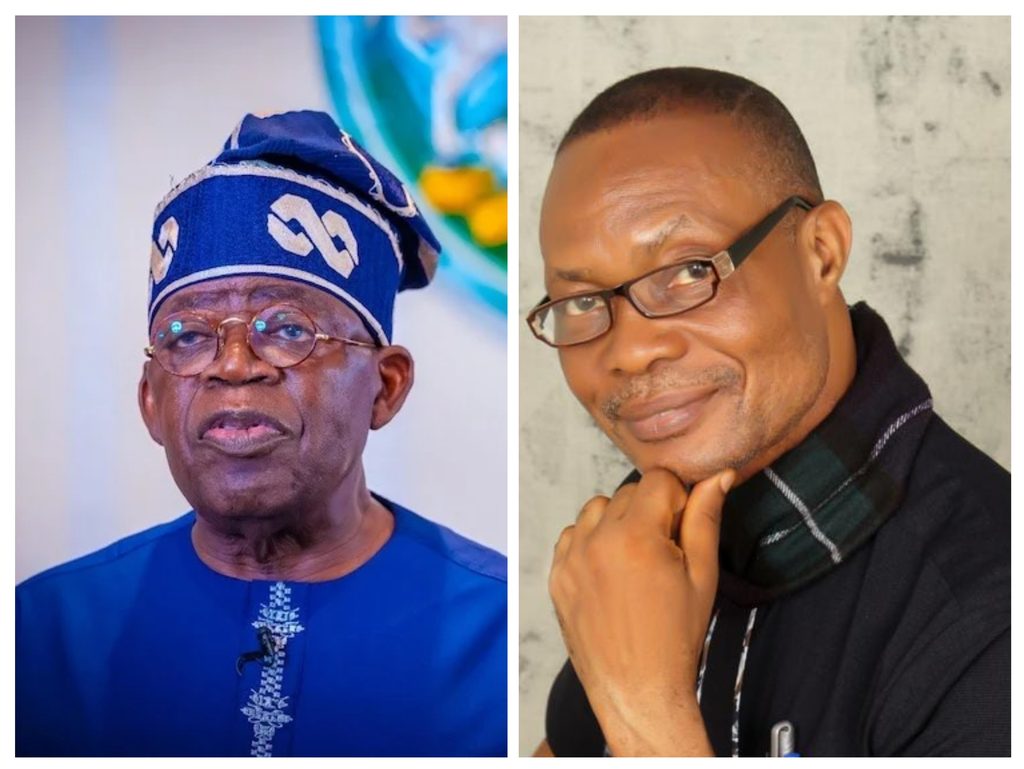
Opinion | By Dr Charles Okhai
President Bola Ahmed Tinubu’s administration has come under criticism over its handling of Nigeria’s economy, education, infrastructure, healthcare and security, with concerns being raised about the justification for another four years in office.
Despite his reported ambition to secure a second presidential term, critics argue that the administration has yet to deliver the improvements Nigerians expected when he assumed office in May 2023.
The central question Nigerians should be asking is simple: What has President Tinubu achieved that justifies another four years in power?
Economy: From Renewed Hope to Renewed Hardship
Tinubu came into office with the promise of Renewed Hope. However, many Nigerians believe the economic policies introduced by his administration have brought unprecedented hardship to households and businesses.
The removal of the petrol subsidy, introduced without sufficient immediate cushioning measures, triggered a sharp increase in the cost of living.
Petrol prices, which were previously below ₦200 per litre, rose significantly, with prices exceeding ₦1,400 in some locations. Transportation costs increased, food prices surged, and small businesses dependent on fuel struggled to survive.
Similarly, the unification and floating of foreign exchange rates, presented as economic reforms, contributed to significant pressure on the naira and increased the cost of imported goods.
Inflation and declining purchasing power have made basic necessities increasingly difficult for ordinary Nigerians to afford.
A bag of rice, bread, eggs and other household essentials have become increasingly expensive, placing enormous pressure on families.
Unemployment and underemployment also remain major concerns. Many graduates struggle to secure employment, while traders and manufacturers contend with high operating costs, expensive energy and multiple taxation.
For many Nigerians, these policies have felt less like economic reforms and more like economic punishment.
Education: A System Struggling Under Neglect
Nigeria’s education sector remains another major area of concern.
Public universities continue to face challenges involving inadequate funding, infrastructure deficits, poor learning conditions and disputes over lecturers’ welfare.
Many students contend with overcrowded lecture halls, deteriorating hostels, inadequate electricity, poor water supply and outdated library facilities.
Although the Federal Government introduced the student loan scheme to improve access to higher education, questions remain about its accessibility, effectiveness and long-term affordability for students from disadvantaged backgrounds.
Increased financial demands in some institutions have also placed additional pressure on families already struggling with the rising cost of living.
At the primary and secondary school levels, inadequate classrooms, teacher shortages, poor facilities and the persistent out-of-school children crisis remain significant challenges.
A country that fails to provide quality education for its younger generation risks undermining its own future.
Infrastructure: Big Announcements, Limited Results?
The Tinubu administration has repeatedly highlighted major infrastructure projects and investments as part of its development agenda.
However, critics argue that the gap between government announcements and improvements experienced by ordinary Nigerians remains substantial.
Electricity supply continues to be unreliable in many communities, forcing households and businesses to depend on generators despite the rising cost of petrol and diesel.
Manufacturers struggle with energy costs, hospitals face difficulties maintaining uninterrupted power supply, and students often contend with inadequate electricity for studying.
Access to clean water, affordable housing and other essential public utilities also remains a challenge across several parts of the country.
The question is not how many projects the government has announced, but how many have been completed and how directly they have improved the lives of Nigerians.
Nigerian Roads: Death Traps Across the Nation
The condition of several major federal highways remains a source of concern for motorists and commuters.
Roads such as the Lagos-Ibadan Expressway, Abuja-Kaduna Highway, East-West Road and Benin-Ore Road have continued to attract complaints over deteriorating sections, potholes, construction delays and abandoned projects.
Poor road conditions contribute to road accidents, damage vehicles, increase transportation costs and make the movement of agricultural produce and other goods more difficult.
Beyond the physical condition of the roads, insecurity along some highways has also heightened the fears of travellers.
Kidnappings and other criminal activities have made road journeys particularly concerning in parts of the country.
Farmers and traders also face difficulties transporting their goods where rural roads are impassable or poorly maintained.
A government that promises national development must demonstrate tangible commitment to safe and functional transportation infrastructure.
Healthcare: A System Under Pressure
Nigeria’s healthcare sector is facing challenges that demand urgent government attention.
Many public hospitals continue to struggle with inadequate medical equipment, insufficient personnel, poor facilities and shortages of essential supplies.
Patients in some facilities are required to purchase basic medical materials and medications, adding to the financial burden of accessing healthcare.
The continued migration of Nigerian doctors, nurses and other healthcare professionals to foreign countries has also raised concerns about the future of the country’s healthcare delivery system.
Poor remuneration, difficult working conditions and limited opportunities have been identified among the factors contributing to the brain drain.
Meanwhile, the country’s political and economic elite, including some public officeholders, continue to seek medical treatment abroad.
This raises questions about confidence in the domestic healthcare system and the government’s commitment to improving public medical facilities.
So, Why Does Tinubu Want a Second Term?
If Nigerians are still struggling with economic hardship, education deficits, inadequate infrastructure, deteriorating roads and an overstretched healthcare system, what compelling achievements can President Tinubu present as justification for another four years?
For his critics, the concern is that the struggle for political power appears to be receiving greater attention than the everyday difficulties confronting ordinary citizens.
Nigerians were promised Renewed Hope, but many now associate the administration with rising living costs, declining purchasing power, poverty, insecurity and uncertainty about the future.
A second term should not be treated as an automatic entitlement. It should be an opportunity for Nigerians to assess the government’s record, examine its achievements and determine whether its policies have delivered meaningful improvements.
Leadership is a responsibility that must be justified through performance, accountability and measurable results.
President Tinubu and his administration must therefore answer the questions surrounding their record in office rather than rely solely on political loyalty and campaign promises.
Ultimately, Nigerians deserve a government that delivers affordable living conditions, quality education, functional infrastructure, accessible healthcare and lasting security.
The question remains: What has President Tinubu achieved in his first term that should convince Nigerians to give him another four years?
Dr Charles Okhai