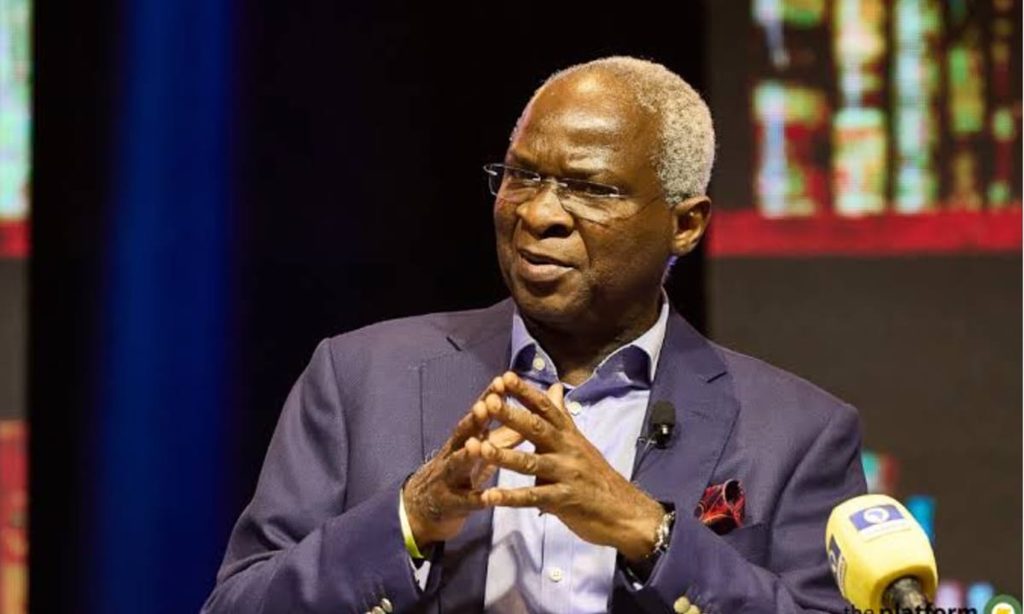
Former Lagos State Governor and ex-Minister of Power, Babatunde Raji Fashola, SAN, has criticised state Attorneys-General over their alleged failure to take decisive action against political violence across Nigeria.
Fashola argued that prosecuting even one person involved in political violence and making the case a public example could discourage others from engaging in similar acts.
The former governor expressed concern that no state Attorney-General had taken up the issue decisively in collaboration with the Attorney-General of the Federation (AGF) to ensure that perpetrators are brought to justice.
According to him, existing laws provide sufficient grounds to prosecute those responsible for political violence, but the authorities must demonstrate the political will to enforce them.
Fashola said: “The answer clearly is that if it lay in my power today, all you need is one example. All you need is one example, and I don’t know why we have not seen any state Attorney-General take this matter on frontally, along with the Federal Attorney-General.
“Just prosecute one person, make it a celebrated case, and I’m sure this nonsense will stop because there’s enough laws to get this done.”
He also called on the Attorney-General of the Federation to collaborate with the Inspector-General of Police (IGP) to investigate the conduct of security personnel deployed to polling stations where political violence occurred.
Fashola insisted that police officers found to have participated in or facilitated electoral violence should equally be held accountable and prosecuted.
“Attorney-General, Federation working with Inspector-General of Police, who were the officers at the polling station? What happened? I want a report. Prosecute some of the policemen who even may be complicit in allowing this to happen. It will come to an end,” he said.
The former governor further maintained that politics should not be treated as a contest of physical strength or violence but as a competition of ideas, policies and intellectual arguments.
He said democratic politics should allow candidates and political parties to challenge one another, win or lose elections, and learn from their opponents.
“It is not a war of physicality. It is a clash of superior and differing ideas, and that you can win today and lose tomorrow,” Fashola added.
He explained that embracing such a sporting spirit would enrich political debates and promote healthy competition among political actors.
Fashola’s comments come amid persistent concerns over political violence and electoral misconduct in Nigeria, with renewed calls for stronger accountability and the prosecution of individuals involved in attacks, intimidation and other election-related offences.