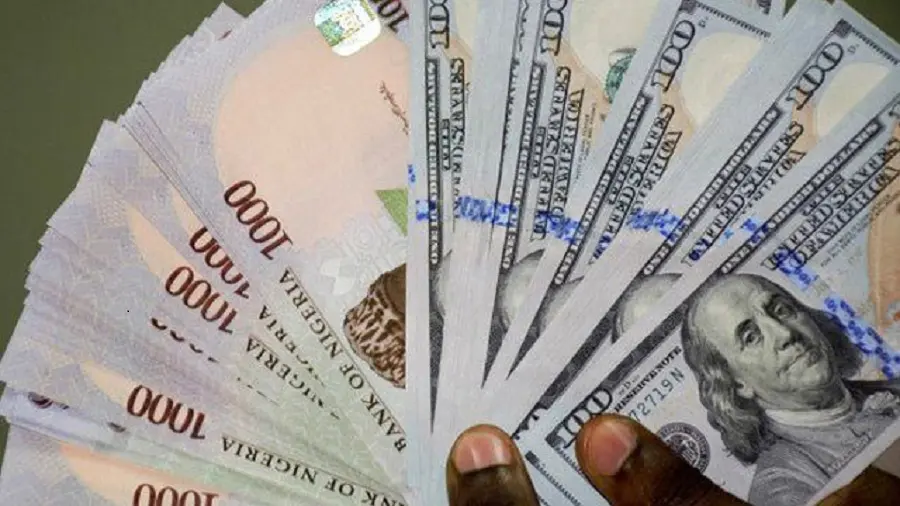
Nigeria’s currency, the Naira, experienced a slight appreciation in the parallel market, reaching ₦1,475 per dollar compared to ₦1,480 per United States dollar it traded the previous day.
However, in the Nigerian Autonomous Foreign Exchange Market (NAFEM), the Naira depreciated to ₦1,476.95 per dollar.
According to data from FMDQ, the indicative exchange rate for NAFEM increased slightly from ₦1,476.12 per dollar to ₦1,476.95 per dollar on Monday, resulting in an 83 kobo depreciation for the Naira.
The volume of dollars traded on the NAFEM also increased significantly by 94.5 per cent, reaching $236.99 million compared to $121.87 million on Monday.
As a result, the margin between the parallel market and NAFEM rates narrowed to ₦1.95 per dollar from ₦3.88 per dollar on Monday.
A stronger Naira offers a number of advantages for the Nigerian economy.
The more the Naira regains its value, the cheaper imported goods will become, which benefits consumers and businesses that rely on them.
This can lead to lower prices on everyday goods and increased purchasing power for Nigerians.
Nigerian exports become more competitive on the global market as their foreign currency price goes down.
This can encourage businesses to export more and generate foreign income, boosting the economy.
Also, a stronger Naira can help control inflation, which is the rise in prices of goods and services. This is because imported goods, a major contributor to inflation, become cheaper.
It is no longer news that the Nigerian government often borrows money in foreign currencies.
However, with a stronger Naira, the cost of repaying these debts decreases, freeing up resources for other government programs.