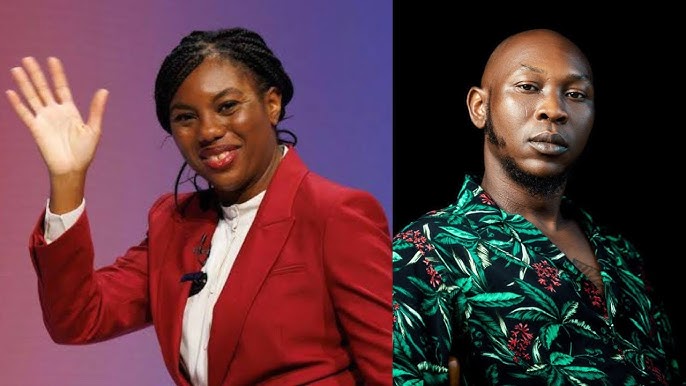
Afrobeat musician Seun Kuti has strongly criticized Kemi Badenoch, the leader of the United Kingdom’s Conservative Party, over her controversial remarks about Nigeria.
In a passionate response during an Instagram live session, Kuti called on African governments to ban Badenoch from entering the continent, accusing her of insulting not only Nigerians but also their ancestors.
Badenoch, who has defended her stance despite widespread backlash, reportedly spoke about her childhood in Nigeria, describing it as a period overshadowed by fear and insecurity in a country struggling with corruption. Her remarks have drawn ire, particularly from Vice President Kashim Shettima and others, who have accused her of denigrating Nigeria.
Seun Kuti, reacting vehemently to her statements, expressed his anger by highlighting what he perceived as her disrespect towards African nations and their history. He went as far as to accuse her of insulting African ancestors, citing her previous comments suggesting that African nations should pay European countries for the impacts of colonialism. According to Kuti, this was a severe affront to the memory of millions of Africans who suffered under colonial rule.
He further demanded that African governments take a stand against Badenoch, stating, “She’s someone who should be banned by African governments from stepping into Africa. Once she steps into Africa, she should be jailed.” Kuti’s call for action reflects a broader sentiment of frustration among some African leaders and citizens regarding the perception of African countries and their people in the West. His comments have sparked further debate on the topic of colonialism, reparations, and the ongoing challenges facing African nations.
The controversy surrounding Badenoch’s remarks continues to raise questions about how African leaders and citizens view their historical relationships with former colonial powers, as well as the broader discourse on Africa’s place in the modern world order. Seun Kuti’s call for a ban on Badenoch has added fuel to these discussions, highlighting the tensions between African nations and figures in the West who make critical statements about the continent.