



The African Democratic Congress (ADC) has emerged as the main opposition party in the Senate following the defection of some lawmakers to the party on Thursday. A total of nine senators on... Read more »
The Sokoto State Government has approved the early payment of March salaries for workers in the state ahead of the Eid-el-Fitr celebration. Governor Ahmed Aliyu gave the approval for the payment to... Read more »

The Edo State publicity secretary of the Peoples Democratic Party (PDP), Dan Osa-Ogbegie, has announced his resignation from the party. Osa-Ogbegie in a statement issued on Thursday said the opposition across the... Read more »
The Fulani Christian Association of Nigeria (FCAN) has firmly rejected any connection with two prominent Fulani socio-cultural groups recently mentioned in discussions about security concerns in Nigeria. Speaking during a gathering in... Read more »

A Facebook user identifying as Norman Finkelstein posted a picture of Prime Minister Benjamin Netanyahu with the statement on March 11, 2026: “The individual wanted by the ICC has been missing from... Read more »

At least 40 per cent of Nigerian adults live with hypertension, according to the 2025 State of Health of the Nation Report released by the Federal Ministry of Health and Social Welfare.... Read more »
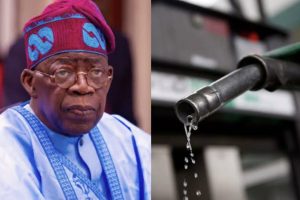
A new study has revealed that about 63 per cent of Nigerians fell below the poverty line following the removal of petrol subsidy, highlighting the welfare impact of the country’s recent economic reforms. The research, presented on Thursday at a stakeholders’ dialogue organised by the Agora Policy in Abuja, showed that the national poverty headcount rose sharply from a baseline of about 49.8 per cent to roughly 63 per cent after the subsidy removal. The rate later moderated slightly following the introduction of social protection measures. The dialogue, themed “Sustaining and Deepening Economic Reforms in Nigeria,” brought together policymakers, economists, civil society leaders, and private sector representatives to examine the effects of the Federal Government’s reform agenda. Participants included the Deputy Governor for Economic Policy at the Central Bank of Nigeria, Muhammad Abdullahi; the Special Adviser to the President on Finance and Economy, Sanyade Okoli; the World Bank Senior Economist for Nigeria, Samer Matta; the Country Director of CARE International, Hussaini Abdu; and the Executive Director of Agora Policy, Waziri Adio. The study was presented by a Senior Lecturer in the Department of Economics at the University of Abuja, Mohammed Shuaibu. It analysed the economic and social consequences of major reforms introduced by the Federal Government, including the removal of petrol subsidy and adjustments in electricity tariffs. President Bola Ahmed Tinubu had announced the removal of the petrol subsidy during his inauguration on May 29, 2023. According to the study, the policy triggered widespread price increases across the economy and significantly affected household welfare. “After the subsidy removal, poverty increased from a baseline of about 50 per cent to 63 per cent,” Shuaibu said. He noted that social protection initiatives helped reduce the severity of the impact but did not fully reverse the decline in welfare conditions. “However, when social protection measures such as cash transfers were introduced, the poverty rate moderated to around 56.2 per cent,” he added. The findings showed that the effects of the reform were uneven across income groups. While high-income households were largely shielded from the shocks, low-income households experienced the greatest decline in purchasing power. According to the data, poverty among low-income households rose sharply from about 50 per cent before the subsidy removal to around 63 per cent afterwards. At the same time, the national poverty gap widened significantly. The poverty gap increased from 31.6 per cent to over 45 per cent, indicating deeper deprivation among poor households. Although social transfers slightly reduced the gap, the improvement remained limited due to delays in implementing intervention programmes and the relatively small scale of support provided. The study also examined how the reforms affected household consumption patterns. Findings showed that consumption declined across all income groups following the removal of the subsidy and the adjustment of electricity tariffs. “Across the board, household consumption declined following both the subsidy removal and electricity tariff adjustments. However, social transfers helped cushion the impact, especially for low-income households,” Shuaibu explained. The decline in consumption was particularly pronounced among rural and low-income households, where rising energy and transport costs significantly reduced spending capacity. Urban low-income households also experienced reduced consumption, though the effect was slightly moderated where social transfers were available.... Read more »

President Bola Ahmed Tinubu on Thursday convened a nearly two-hour security meeting with service chiefs at the Presidential Villa, marking the first such gathering since Tunji Disu assumed office as Inspector-General of Police. According to reports, the service chiefs arrived at the Villa without their usual official vehicles, making them difficult to identify, and left the premises at approximately 5:10 pm after extended deliberations with the President. The chiefs and the IGP were later identified as they exited the forecourt following the closed-door session. The meeting comes amid rising security concerns nationwide, particularly following recent killings of military commanding officers in various operational theatres. In the past week alone, the military lost at least three commanding officers in charge of forward operating bases, following a surge of attacks on security formations and personnel, especially in the North-East where Boko Haram and Islamic State West Africa Province insurgents have intensified assaults. Notable incidents include the attack on Ngoshe in Borno State, which resulted in abductions, as well as separate attacks on Konduga, Marte, Jakana, and Mainok, all in Borno State. Thursday’s security meeting is IGP Disu’s first formal engagement with the President and service chiefs since his appointment on February 28, 2026, following the resignation of his predecessor. While details of the discussions have not been publicly disclosed, the meeting likely focused on the recent spike in attacks on security personnel, the vulnerability of communities in the North-East, and coordination among security agencies. Read more »

The Federal High Court sitting in Akure, the Ondo state capital, has ruled that Governor Lucky Aiyedatiwa of Ondo state did not have the legal right to contest the 2028 governorship election... Read more »

Omoyele Sowore, a publisher and Nigerian activists has joined protesters to march across streets in Aba, Abia state. The activists and the protesters took to the streets of Abia State’s commercial city... Read more »