As the world commemorates World Environment Day, attention is once again turning to climate change, environmental sustainability, and the future of vulnerable communities. Yet for Nigeria and much of West Africa, the most important climate conversation may not be taking place in international conference halls or global policy forums. It may be unfolding quietly on farms where millions of smallholder farmers are struggling to adapt to increasingly unpredictable weather patterns.
According to Mannir U. Ringim, Executive Director of Business Banking at Union Bank of Nigeria, the future of climate resilience in Nigeria lies not only in environmental policies but also in how financial institutions support the agricultural sector.
Nature’s Warning Signs Are Becoming Harder to Read
For generations, farmers across Africa relied on nature’s signals to guide their planting seasons. The arrival of rainfall, the movement of birds, and changes in weather patterns helped communities predict harvest cycles and manage agricultural activities.
Today, however, those traditional indicators have become increasingly unreliable.
Rainfall that once arrived consistently now comes late or fails altogether. Flooding occurs more frequently, droughts last longer, and environmental conditions continue to shift in ways that make farming more difficult.
The changing climate has created enormous uncertainty for farmers, many of whom depend entirely on seasonal agriculture for their livelihoods.
While nature continues to send signals, Ringim argues that those signals are becoming more difficult and more dangerous to interpret.
Climate Change Is First Felt on the Farm
Across Nigeria and the wider Sahel region, climate change is no longer a distant environmental concern but a daily economic reality.
Desertification continues to threaten farmlands in northern communities. Lake Chad, once one of Africa’s largest freshwater bodies, has significantly reduced in size, affecting millions who depend on fishing and farming activities.
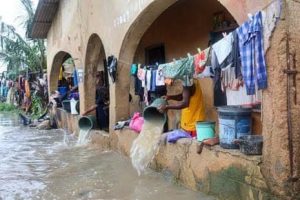
Elsewhere, severe flooding destroys crops, washes away infrastructure, and wipes out incomes built over entire farming seasons.
According to Ringim, these challenges are often treated as separate issues agriculture, security, poverty, migration, or disaster relief when in reality they are all interconnected symptoms of climate change.
A failed harvest increases food prices. Rising food prices worsen poverty. Poverty contributes to migration and social instability. Climate change, therefore, sits at the centre of many of the economic and social challenges confronting the region.
The Agricultural Financing Gap
Despite agriculture’s importance to Nigeria’s economy, the sector continues to receive a relatively small share of available financing.
Agriculture remains one of the country’s largest employers and contributes significantly to national economic output. Yet many farmers struggle to access affordable credit needed to expand production, purchase equipment, or adopt climate-resilient technologies.
Financial institutions have traditionally viewed agriculture as a high-risk sector due to unpredictable weather conditions, seasonal income patterns, limited collateral, and market uncertainties.
As a result, many farmers operate with insufficient capital, leaving them unable to invest in irrigation systems, improved seeds, mechanisation, or storage facilities.
Ringim argues that this lack of investment is becoming increasingly costly, not only for farmers but also for the wider economy.
Without adequate financing, farmers cannot adapt to climate change. Without adaptation, food production declines. When food production falls, food prices rise, affecting millions of consumers.
Agricultural Finance Is Climate Finance
One of the key arguments advanced by Ringim is that agricultural financing should be viewed as a form of climate financing.
Investments that improve farming productivity often serve a dual purpose by also increasing resilience to climate shocks.
For example, irrigation systems reduce dependence on rainfall. Improved seed varieties help crops withstand drought conditions. Modern storage facilities reduce post-harvest losses, while sustainable land management practices improve soil health and productivity.
These investments strengthen food security while simultaneously helping communities adapt to environmental changes.
According to Ringim, this makes agriculture one of the most practical and effective channels through which climate action can be delivered across Nigeria and West Africa.
New Financial Tools Are Changing the Landscape
While agricultural lending has historically been considered risky, advances in technology and financial innovation are beginning to transform the sector.
Financial institutions now have access to tools such as satellite imagery, digital payment records, weather-index insurance, farm mapping systems, and data-driven credit assessment models.
These innovations enable lenders to better evaluate risk and extend financing to farmers who were previously excluded from formal financial systems.
New approaches such as value-chain financing, warehouse receipt systems, mechanisation loans, and anchor-borrower programmes are also helping bridge the gap between farmers and financial institutions.
According to Ringim, the challenge is no longer the absence of solutions but the need to deploy existing solutions at a much larger scale.
Collaboration Is Essential
Addressing agricultural financing challenges requires cooperation among governments, banks, development finance institutions, insurers, agribusinesses, and technology providers.
Governments must continue investing in rural infrastructure and supportive policies. Development institutions can provide long-term capital and risk-sharing mechanisms. Financial institutions can structure innovative products tailored to agricultural realities.
At the same time, agritech firms and insurance companies can help reduce uncertainty through improved data collection and risk management tools.
Ringim believes that meaningful climate adaptation can only be achieved when these stakeholders work together to create a financial ecosystem that supports farmers rather than leaving them to face climate risks alone.
Turning Agriculture Into Opportunity
Beyond addressing environmental challenges, increased agricultural investment has the potential to unlock significant economic opportunities.
Nigeria possesses vast areas of arable land, a youthful population, and established agricultural value chains capable of supporting large-scale growth.
With adequate financing, agriculture can become a source of employment, entrepreneurship, and wealth creation for millions of young people.
Rather than viewing farming communities solely through the lens of vulnerability, Ringim argues that they should be seen as drivers of future economic growth and resilience.
A Call to Act
As World Environment Day draws attention to global climate challenges, Ringim believes the most impactful action Nigeria’s financial sector can take is to invest boldly in agriculture.
He argues that climate action should not be limited to international pledges or environmental campaigns but must translate into practical investments that help farmers adapt, produce more food, and strengthen rural economies.
For decades, many farmers have felt overlooked by the formal financial system. Today, Ringim says, there is an opportunity to send a different message one that recognises farmers as central to both climate resilience and economic development.
According to him, financing agriculture is no longer simply a banking decision. It is a climate decision, a food security decision, and ultimately a decision about the future of Nigeria and the wider African continent.