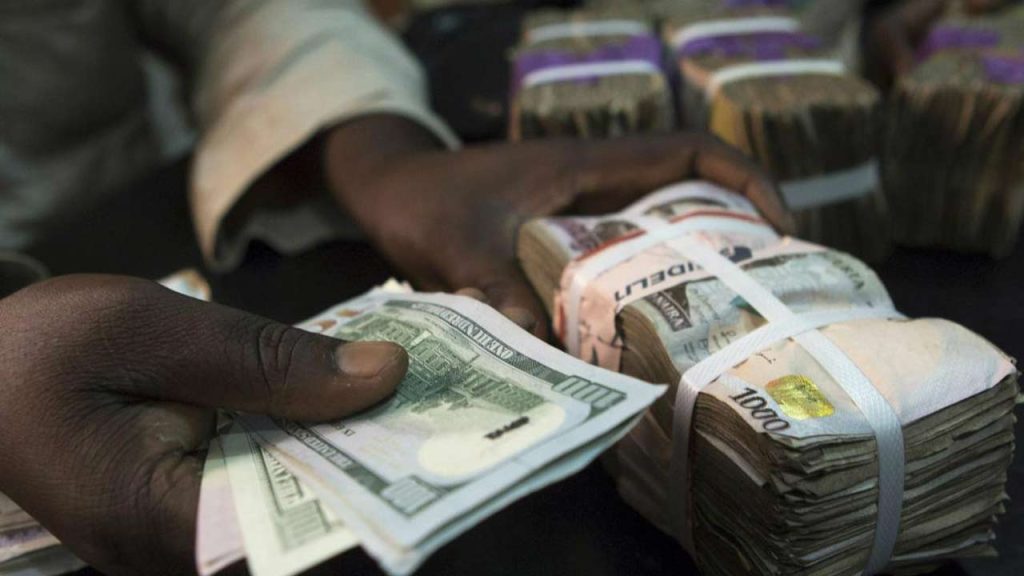
The naira continued to trade under pressure in the parallel market on Wednesday, February 18, 2026, with the United States dollar exchanging at an average of ₦1,370 (selling) and ₦1,355 (buying) among Bureau De Change (BDC) operators in Lagos.
Currency dealers say the marginal fluctuations reflect ongoing demand for foreign exchange from importers, travelers, and businesses that struggle to access dollars through official banking channels.
Parallel Market (Black Market) Rates
| Currency Pair | Buying Rate | Selling Rate |
|---|---|---|
| USD/NGN | ₦1,355 | ₦1,370 |
Official Window Rates
At the official market monitored by the Central Bank of Nigeria (CBN), the dollar traded within a lower band:
- Highest recorded rate: ₦1,340
- Lowest recorded rate: ₦1,328
The gap between the official and parallel market rates highlights the continued fragmentation of Nigeria’s foreign exchange market, despite regulatory efforts aimed at unifying exchange windows and improving liquidity.
CBN speaks on Parallel Market Transactions
The apex bank has repeatedly stated that it does not recognize the black market, maintaining that individuals and businesses seeking foreign exchange should obtain it through authorized financial institutions. The regulator argues that patronizing informal markets fuels speculation and weakens the naira.
Why the Parallel Market Still Thrives
Financial analysts attribute the sustained activity in the street market to several structural factors:
- Limited dollar supply within official channels
- High demand for imports and overseas payments
- Processing delays associated with formal forex applications
- Market-driven pricing that reacts faster to economic realities
As a result, many small and medium-scale businesses continue to rely on BDC operators for quicker access to foreign currency, even at higher rates.
Rate Variations Are Common
Traders note that forex prices are highly volatile and may differ from one location or dealer to another due to negotiation margins, transaction volume, and demand pressures. This means the actual rate at which individuals buy or sell dollars may not exactly match published averages.