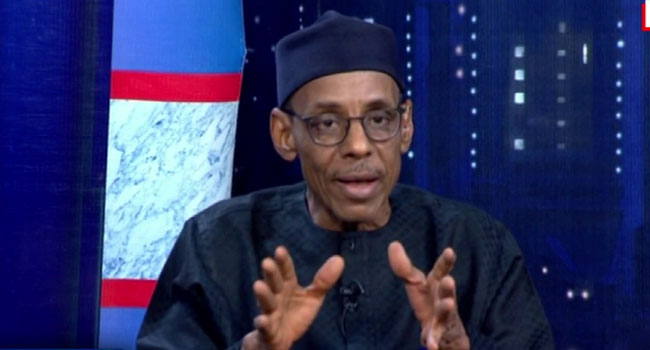
Dr. Hakeem Baba-Ahmed, who served as the Special Adviser on Political Matters in the Office of Vice President Kashim Shettima, has resigned from his role within the administration of President Bola Ahmed Tinubu.
Sources within Aso Rock disclosed to Daily Trust that Baba-Ahmed submitted his resignation approximately two weeks ago. However, as of the latest update, it remains uncertain whether the presidency has officially accepted or acknowledged his departure.
Service in the Presidency
Appointed in September 2023, Dr. Baba-Ahmed played a significant role in shaping the political direction of the presidency, particularly within the office of the Vice President. During his tenure, he represented the federal government at several high-level engagements, including a national conference held in January 2025 in Abuja. The event, themed “Strengthening Nigeria’s Democracy: Pathway to Good Governance and Political Integrity,” was one of many platforms where he advanced democratic ideals.
A Tenure Marked by Controversy
Despite his credentials and experience, Dr. Baba-Ahmed’s role was not without challenges. He occasionally found himself at the center of political friction, particularly regarding the administration’s relationship with key figures in northern Nigeria.
One of the more contentious episodes occurred in April 2024 when the Minister of State for Defence, Bello Mohammed Matawalle, publicly accused some northern appointees—Baba-Ahmed included—of not doing enough to support and defend the Tinubu administration against criticisms.
The disagreement intensified following Baba-Ahmed’s rebuttal of Matawalle’s remarks about the Northern Elders Forum (NEF). Matawalle had dismissed the NEF as a “political paperweight,” a comment Baba-Ahmed found unnecessary. He urged the Minister to focus more on his responsibilities and tangible accomplishments rather than engage in public disparagement of northern advocacy groups.
Responding to the pushback, Matawalle reasserted that all presidential appointees, including Baba-Ahmed, were expected to uphold and promote the government’s image. “Every appointee of President Tinubu, including Dr. Baba-Ahmed, owes the government a duty to promote, elucidate, and advance its good works and commendable efforts across all sectors,” the minister emphasized.
Profile of a Statesman
Dr. Hakeem Baba-Ahmed, born on September 11, 1955, is a well-regarded figure in Nigeria’s civil service and political landscape. A native of Kaduna State and a devout Muslim, Baba-Ahmed has built a distinguished career spanning academia, public administration, and political advocacy.
He earned his academic stripes from renowned institutions, including Ahmadu Bello University (ABU) Zaria, the London School of Economics, and the University of Sussex, culminating in a doctorate degree. He began his professional journey as a lecturer before venturing into the civil service, where he rose to prominent positions such as Permanent Secretary in the Federal Civil Service.
In addition, he served as Secretary to the Kaduna State Government and also as Secretary of the Independent National Electoral Commission (INEC), roles that gave him a front-row seat to Nigeria’s democratic evolution. His exemplary service was recognized with the national honor of Officer of the Federal Republic (OFR).
Influence Beyond Government
Prior to his appointment in the Tinubu administration, Baba-Ahmed held the position of Director of Publicity and Advocacy at the Northern Elders Forum (NEF). In that role, he was an influential voice on regional and national issues, often speaking out on policies that affected northern Nigeria and the broader Nigerian society. His commentaries frequently sparked national conversations and demonstrated his commitment to public discourse and accountability.
What’s Next?
While Dr. Baba-Ahmed has yet to publicly confirm his resignation or clarify his next steps, his departure—should it be officially accepted—marks a notable shift within the presidency’s political advisory circle. Observers are keen to see whether he will return to public advocacy, academic engagement, or take on a new role within or outside the political sphere.