Artist Patrick Cikuru Cirimwami wades knee-deep among a pile of plastic bottles near the shores of Lake Kivu in the eastern Democratic Republic of the Congo, filling a massive sack with as many as he can carry.
Since there is no municipal waste collection service, rubbish from the area regularly clogs Lake Kivu, which in turn causes frequent malfunctions at the hydropower plant and subsequent blackouts.
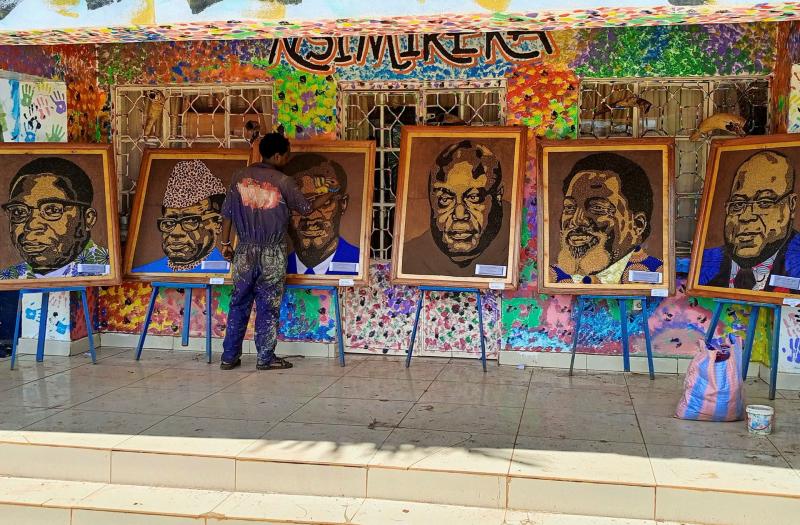
However, Cikuru Cirimwami has larger aspirations than only aiding in the cleanup. The molten plastic will be used to paint images of politicians as a form of protest against what he sees as their indifference to environmental protection.
“There have been many conferences in DR Congo, many meetings … but we have not taken measures to protect nature. As a Congolese artist, I can send a message,” said the 26-year-old.
The artist’s paintings of major heavyweights, including independence leader Patrice Lumumba and current president Felix Tshisekedi, were on show at a cultural centre in his hometown of Bukavu last month.
Like many other African countries, Congo has insisted on its right to build its economy by exploiting its abundant natural resources. Some people are upset that oil blocks in the world’s second-largest rainforest are being put up for auction.
It has promised to use cutting-edge drilling techniques and stringent regulations to lessen the possibility of a catastrophic outcome. It also convened meetings ahead of the COP 27 climate summit in November to urge developed countries to keep their promise to poorer ones to provide equitable financing for the global effort to combat climate change.