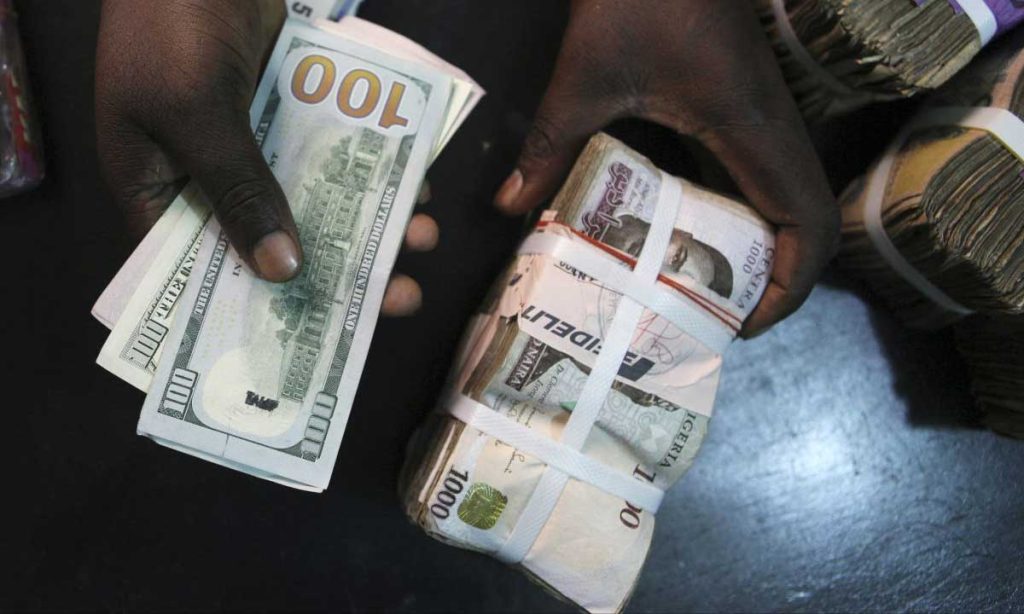
The value of the Nigerian naira against the United States dollar continues to fluctuate across different segments of the foreign exchange market, with a noticeable gap between official and parallel market rates.
As of Monday, March 23, 2026, traders in the Lagos parallel market commonly referred to as the black market quoted the naira at around ₦1,410 per dollar for selling, while the buying rate stood at approximately ₦1,400 per dollar. These figures were obtained from sources within the Bureau De Change (BDC) segment, where most informal currency transactions take place.
Despite the widespread use of the parallel market, the Central Bank of Nigeria (CBN) has consistently maintained that it does not recognise or regulate black market trading. The apex bank has repeatedly advised individuals and businesses seeking foreign exchange to channel their transactions through authorised financial institutions, particularly commercial banks operating within the official market.
A breakdown of the parallel market rates shows:
- Selling rate: ₦1,410 per dollar
- Buying rate: ₦1,400 per dollar
Meanwhile, at the official window regulated by the CBN, the naira traded within a slightly narrower range. Data indicates that the highest recorded rate for the day was about ₦1,399 per dollar, while the lowest rate hovered around ₦1,380 per dollar.
The difference between the official and black market rates highlights the ongoing pressure on Nigeria’s foreign exchange system, driven by factors such as demand for dollars, limited supply, and broader economic conditions.
It is important to note that exchange rates are not fixed and may vary depending on location, volume of transaction, and the source of funds. As a result, individuals buying or selling foreign currency could encounter rates that differ slightly from those quoted above.
Market watchers continue to monitor the situation closely, as fluctuations in the naira’s value have direct implications for import costs, inflation, and overall economic stability.