By Dozie Ikedife Jr
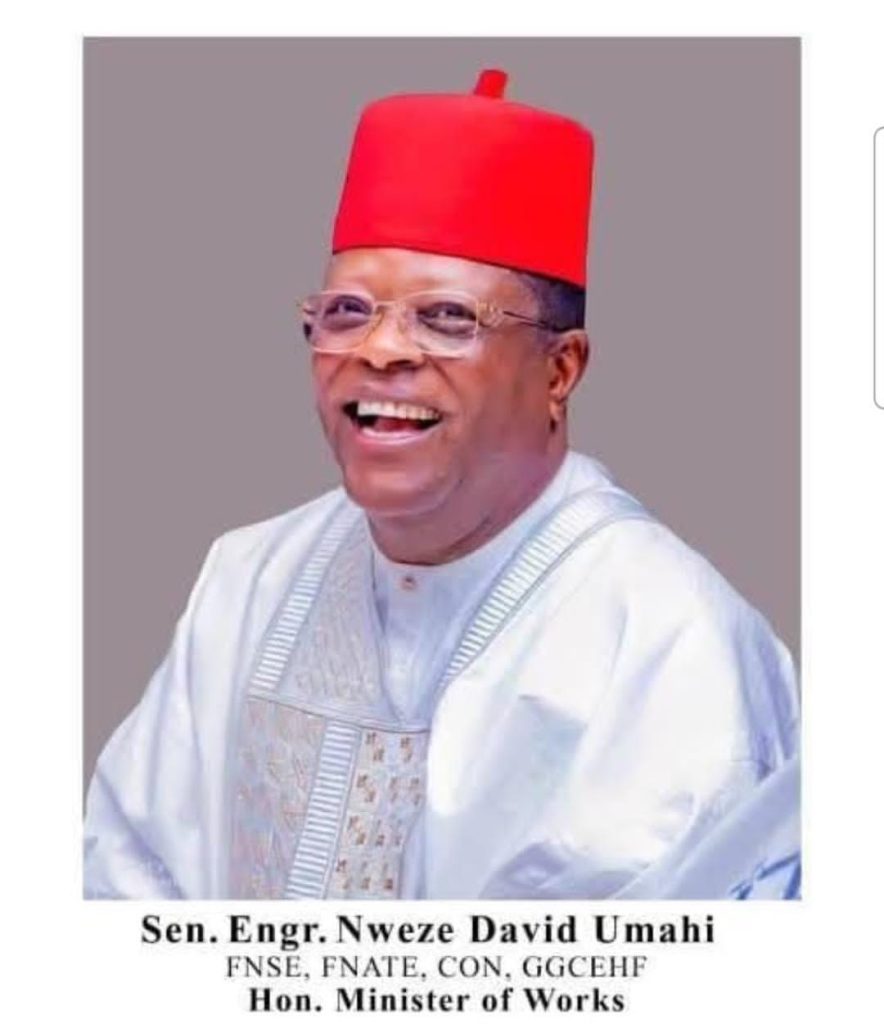
When President Bola Ahmed Tinubu appointed Senator Engr. David Umahi as Nigeria’s Minister of Works in August 2023, many observers questioned whether a former governor and trained civil engineer could successfully manage one of the country’s most demanding ministries. Three years later, Umahi has emerged as one of the most visible and active members of the Federal Executive Council, earning praise for his hands-on leadership while also attracting criticism over some of his policies and flagship projects.
A New Direction for Nigeria’s Road Infrastructure
One of Umahi’s most significant policy initiatives has been the gradual transition from conventional asphalt roads to rigid concrete pavement on many federal highways. He argues that concrete roads offer greater durability, can last between 50 and 100 years when properly constructed, require less frequent maintenance, and allow construction work to continue during the rainy season.
Beyond changing construction materials, the Ministry of Works has introduced stricter standards for project execution. Contractors are expected to mobilize quickly after receiving funds, maintain continuous work on project sites, and meet clearly defined timelines. The ministry has also installed project signboards at regular intervals to improve public awareness and accountability.
A Hands-On Minister
Unlike many public officials who rely heavily on reports from subordinates, Umahi has adopted an unusually active style of supervision. He regularly visits construction sites across the country, personally inspects ongoing projects, engages contractors, and publicly issues warnings when work falls behind schedule.
Supporters argue that this direct approach has improved quality control, accelerated decision-making, and revived several projects that had suffered years of delays.
Renewed Hope Legacy Projects
Under President Tinubu’s Renewed Hope Agenda, the Ministry of Works is implementing some of the most ambitious highway projects in Nigeria’s history. These include the Lagos–Calabar Coastal Highway, the Akwanga–Jos–Bauchi–Gombe–Maiduguri Super Highway, the Abuja–Kaduna–Zaria–Kano Expressway, the Abuja–Lokoja Road, and other strategic corridors designed to improve connectivity, stimulate commerce, and strengthen national integration.
Umahi has consistently maintained that these projects are intended to ensure that every geopolitical zone benefits from major federal infrastructure investments.
Praise for Performance
Many political observers, government officials, and members of the ruling party regard David Umahi as one of the strongest-performing ministers in the Tinubu administration. His visibility, technical background as a civil engineer, attention to detail, and insistence on project monitoring have earned him considerable recognition.
His supporters believe that his administration has introduced greater discipline into road construction, improved contractor accountability, and accelerated work on several long-delayed federal highways.
Criticisms and Challenges
Despite these achievements, Umahi’s tenure has not been without controversy.
The Lagos–Calabar Coastal Highway has generated significant public debate, with critics questioning aspects of its procurement process, overall cost, environmental implications, and compensation for affected communities. Others argue that many federal roads across Nigeria remain in poor condition despite increased government spending on infrastructure.
Some analysts also caution that announcements and project flag-offs should not be mistaken for completed achievements. They argue that the true measure of success will be determined by how many projects are completed on schedule, within budget, and to internationally acceptable engineering standards.
An Overall Assessment
David Umahi has undoubtedly become one of the most energetic and visible Ministers of Works in Nigeria’s recent history. His engineering background has influenced a more technical approach to project execution, while his insistence on frequent inspections and contractor accountability has brought renewed urgency to federal road construction.
However, infrastructure projects of this magnitude require time, sustained funding, and consistent execution. The lasting verdict on his tenure will ultimately depend not on the number of projects initiated, but on the quality, durability, and successful completion of the legacy highways now under construction.
From a performance management perspective rather than a partisan political one, David Umahi’s first three years as Minister of Works can reasonably be described as highly productive. Whether history judges his tenure as exceptional will depend on whether these ambitious projects are completed as promised and continue to serve Nigerians for decades to come.
Dozie Ikedife Jr
Nnewi
July 4, 2026