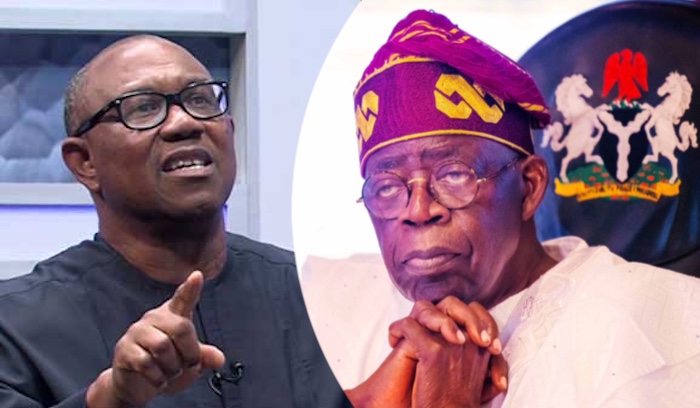
Former presidential candidate Peter Obi has criticised President Bola Tinubu over what he described as the continued failure of Nigeria’s electricity system, accusing the administration of neglecting the national grid more than two years after taking office.
In a statement released on Monday, Obi recalled a campaign pledge in which Tinubu reportedly urged Nigerians not to vote for him if he failed to deliver stable electricity within four years. According to Obi, the current state of power supply shows little progress toward that goal.
Concerns Over Persistent Power Challenges
Obi said that 32 months into the administration, the national grid remains fragile, with recurring outages and limited generation undermining economic growth and daily life.
He argued that Nigerians had placed significant hope in promises of reliable electricity to power homes, support businesses, and drive national development, but many are still struggling with erratic supply and rising energy costs.
“The expectation was clear steady power that would improve productivity and quality of life,” Obi stated, lamenting that those expectations have yet to materialise.
Criticism of Planned Shift to Solar at Presidential Villa
The former Anambra State governor also faulted plans to power the Aso Rock Presidential Villa with solar energy, citing budgetary provisions that reportedly allocated billions of naira for solar installations and related upgrades.
He described the move as troubling, arguing that government institutions should lead efforts to strengthen the national grid rather than disconnect from it.
According to Obi, if the country’s seat of power opts out of the public electricity system, it could signal a lack of confidence in the very infrastructure meant to serve citizens.
“If those in authority remove themselves from the system, who then will ensure that ordinary Nigerians gain access to reliable electricity?” he asked.
Renewable Energy Welcome—But Not at the Expense of Citizens
While acknowledging that renewable energy solutions such as solar power are important for long-term sustainability, Obi maintained that such initiatives should complement not replace efforts to fix the broader electricity network.
He warned that prioritising alternative power for government facilities without visible improvements to public supply risks widening inequality in access to energy.
Call for Accountability and Measurable Progress
Obi concluded by urging the Federal Government of Nigeria to demonstrate stronger commitment to addressing the country’s energy crisis through transparent policies, measurable improvements, and clear communication with citizens.
He added that Nigerians may not expect every campaign promise to be fully realised, but they do expect consistent effort and leadership that reflects the realities faced by the population.
The remarks add to the growing national debate over electricity reform in Nigeria, where persistent grid instability continues to challenge industrial expansion, small businesses, and household welfare.