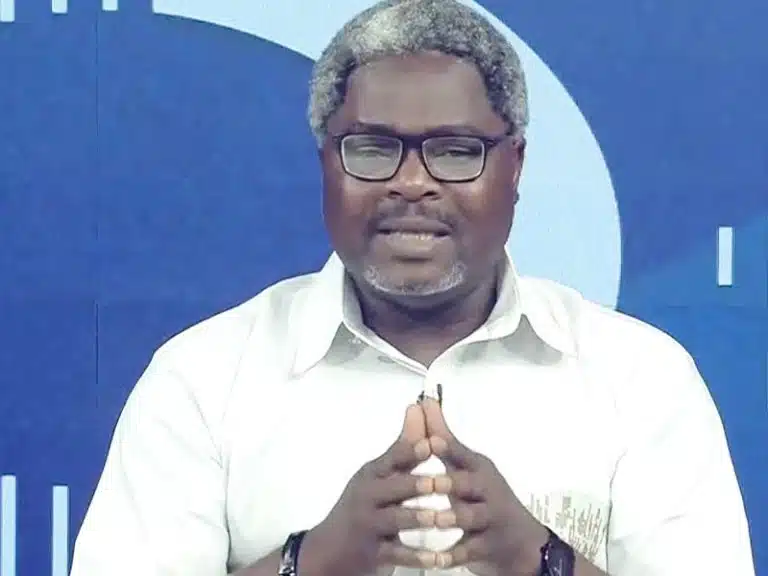
Lere Olayinka, media aide to the Minister of the Federal Capital Territory (FCT), Nyesom Wike, has said the term “infidel” should not automatically be interpreted as an insult, arguing that its meaning largely depends on the religious perspective of the person using it.
Olayinka made the clarification in a social media post on Monday while addressing what he described as the controversy surrounding the use of the word in religious discussions.
According to him, a person may be regarded as an “infidel” by someone from another religious background simply because they do not share the same faith or beliefs.
He argued that the term is not necessarily a derogatory expression but can be used to describe someone whose religious beliefs differ from those of the speaker.
Olayinka explained that, from a Muslim’s perspective, people who do not practise Islam could be described as infidels, while a person speaking from a Christian background could use the term to refer to people who do not share the Christian faith.
He added that the same principle could apply when someone from a traditional religious background is speaking about people who belong to other faiths.
He wrote:
“You are an INFIDEL. I am an INFIDEL. We are all INFIDELS. An INFIDEL is someone who does not have the same religious beliefs as the person speaking.
“If a Muslim is the one speaking, Christians and Traditional religions worshippers are INFIDELs. If a Christian is the one speaking, Muslims and Traditional religions worshippers are INFIDELs. If a Traditional religions worshipper is the one speaking, Christians and Muslims are INFIDELs.
“Therefore, if you are called an INFIDEL, it is not an insult. Simply respond by calling the person an INFIDEL too. DAZZOL.”
The statement comes shortly after Olayinka criticised a cleric identified as Shafiy Adeba over comments which he described as extremist and potentially dangerous to peaceful coexistence among Nigerians of different faiths.
In an earlier post, the FCT minister’s aide alleged that Adeba had claimed Muslims had a “right” to enslave non-Muslims and had made statements suggesting a declaration of war against people he referred to as infidels.
Olayinka expressed concern over the alleged comments, particularly because, according to him, they were being made in Yorubaland, where Muslims, Christians and traditional religion practitioners have historically lived alongside one another.
“This Cleric, by name Shafiy Adeba, said Muslims have ‘Right’ to enslave Non-Muslims. He declared war against those he called infidels ‘Rooted In Islam’. And he is preaching this nonsense in Yorubaland?
“A land of educated and civilised people with Christians, Muslims and Traditional religions worshippers living together under the same roof?
“Methinks people like this man should be behind bars because extremist preachers like him caused Boko Haram that Nigeria is still battling today.”
Olayinka’s latest clarification appears aimed at separating the religious meaning of the word “infidel” from its use as a derogatory expression.
His comments have also reignited discussions about the language used in religious debates, particularly in a country like Nigeria where people from different faiths live and work together.
Nigeria is a deeply religious country with large Muslim and Christian populations, alongside communities that practise traditional African religions. As a result, religious terminology can sometimes generate controversy, especially when words associated with one faith are used in public political or social discussions.
The debate also highlights the importance of context when interpreting religious expressions. While some people may regard “infidel” as a theological description, others may perceive its use in certain circumstances as offensive or inflammatory, particularly when it is deployed during arguments involving religious differences.
Olayinka, however, maintained that the word should not necessarily be treated as an insult and encouraged people to understand its usage from the perspective of the speaker’s religious identity.
His remarks come amid continuing concerns over religious extremism and inflammatory preaching in parts of Nigeria, where authorities and community leaders have repeatedly called for greater tolerance and peaceful coexistence among people of different faiths.