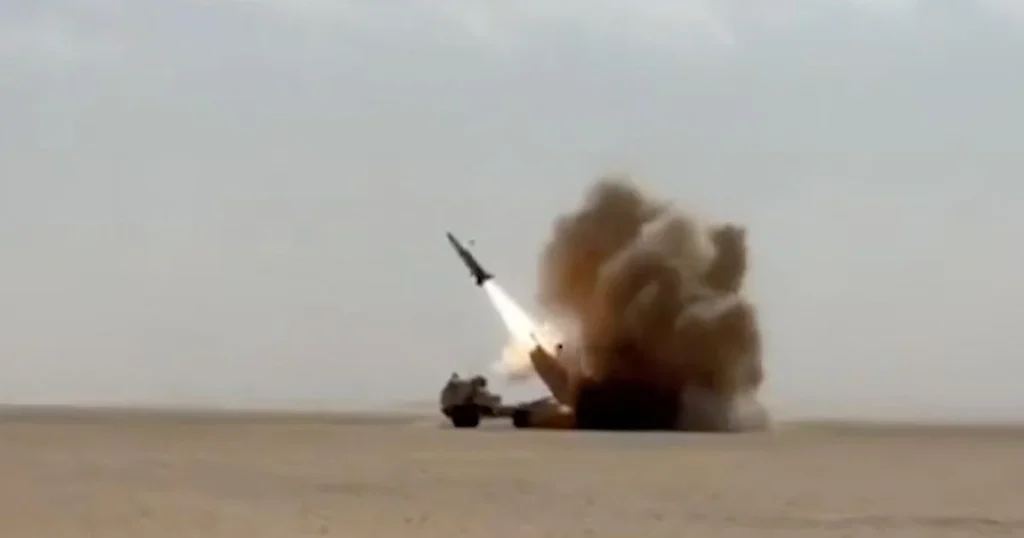
An Iranian strike targeting U.S. military assets in Saudi Arabia has left several American service members wounded and damaged key aircraft, further escalating tensions in an already volatile regional conflict.
According to a U.S. official familiar with the matter, the attack occurred Friday at Prince Sultan Air Base and involved a combination of missiles and unmanned aerial drones launched by Iran. The assault reportedly hit multiple U.S. refueling aircraft stationed at the base, though the exact number of casualties and the severity of injuries remain unclear.
The development, first reported by The Wall Street Journal, gained further credibility after satellite images surfaced online appearing to show visible damage to military equipment at the facility.
The incident comes amid rising casualties among U.S. forces. Benjamin N. Pennington, a 26-year-old Army sergeant, died days after sustaining injuries during an earlier March 1 attack on the same base. In a broader update, United States Central Command confirmed that more than 300 American service members have been wounded since the conflict intensified.
Meanwhile, political developments are unfolding alongside the military escalation. U.S. President Donald Trump on Friday renewed calls for Saudi Arabia and Israel to establish formal diplomatic relations once hostilities with Iran subside.
Speaking at an event in Miami, Trump declared that the time was ripe for normalization efforts, referencing the Abraham Accords—a series of agreements his administration has long promoted to reshape alliances in the region.
However, significant obstacles remain. Saudi Arabia has consistently maintained that any normalization with Israel must be tied to a credible and actionable pathway toward the creation of a Palestinian state, a condition that continues to stall progress.
Amid the ongoing conflict, Iran has also signaled a willingness to cooperate on humanitarian grounds. Speaking in Geneva, Ali Bahreini, Iran’s ambassador to the United Nations, announced that Tehran has agreed to facilitate the movement of humanitarian supplies through the Strait of Hormuz.
The strategic corridor, which handles roughly a fifth of global oil shipments and a significant share of fertilizer trade, has been a focal point of concern since the outbreak of hostilities. Disruptions there have raised fears not only about energy supply but also about global food security due to constraints on agricultural inputs.
Bahreini described the move as part of Iran’s commitment to ensuring that critical aid reaches affected populations despite ongoing military strikes on its nuclear infrastructure. The United Nations has also established a task force aimed at addressing disruptions to global aid delivery caused by the conflict.
While the humanitarian gesture may offer a temporary reprieve, analysts warn that the broader conflict continues to pose serious risks to regional stability, global trade routes, and international security.