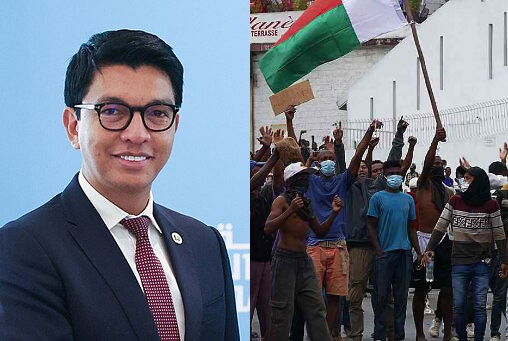
Madagascar’s new military-led government has officially revoked the citizenship of ousted President Andry Rajoelina, just ten days after he was deposed in a military coup that ended his controversial rule.
According to reports released on Friday, a presidential decree annulling Rajoelina’s Malagasy nationality was published in the country’s official gazette, citing national laws that strip citizenship from any citizen who voluntarily acquires a foreign nationality.
The decree explained that Rajoelina, 51, lost his Malagasy citizenship upon acquiring French nationality in 2014, an act that automatically triggered the loss of his local status under Madagascar’s nationality code.
French broadcaster RFI confirmed the development after verifying the decree with the office of the country’s new Prime Minister, Herintsalama Rajaonarivelo, who signed the order on behalf of the transitional government.
Rajoelina, who first rose to power through a coup in 2009 before later winning controversial elections, was impeached on October 14 following weeks of anti-government protests that gripped the capital, Antananarivo. The unrest, largely youth-driven, was fueled by anger over economic hardship, corruption allegations, and questions surrounding his dual nationality.
His French citizenship had sparked intense debate ahead of the November 2023 presidential elections, with opposition groups demanding his disqualification, arguing that he had violated constitutional provisions that require the president to hold only Malagasy nationality.
Despite the uproar and an opposition boycott, Rajoelina proceeded to contest and eventually claimed victory in the disputed polls — a move critics say deepened divisions across the island nation.
The crisis escalated earlier this month when Colonel Michael Randrianirina, commander of the CAPSAT army unit, announced that his soldiers would no longer obey orders to suppress the mass demonstrations. Security forces had previously used force to disperse protesters, leading to casualties and heightened tensions.
Following the military’s defection, Rajoelina fled Madagascar on October 11, reportedly going into hiding. In a brief statement released before his impeachment, he claimed he was in “a safe location” for security reasons but refused to disclose his whereabouts.
The revocation of his citizenship marks another dramatic chapter in Madagascar’s ongoing political turmoil. Analysts say the move could effectively bar Rajoelina from returning to politics, as the loss of nationality disqualifies him from holding public office under the country’s constitution.
The transitional authorities have yet to announce a timeline for fresh elections or a return to civilian rule.