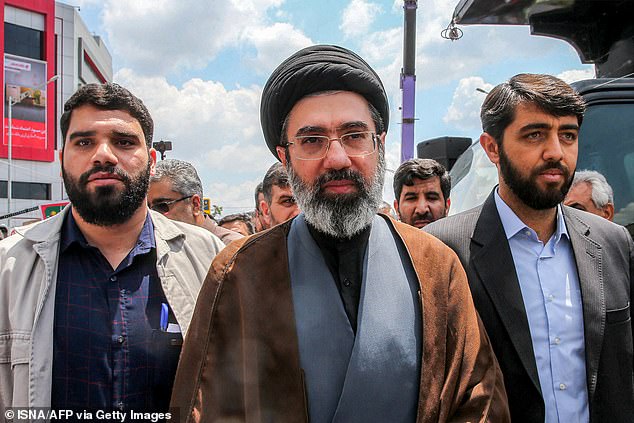
Former U.S. President Donald Trump has stirred international controversy after stating that American intelligence officials briefed him on allegations regarding the personal life of Mojtaba Khamenei, a prominent Iranian cleric.
Speaking during an interview with Fox News, Trump said the Central Intelligence Agency (CIA) had shared claims suggesting that Mojtaba son of Iran’s Supreme Leader, Ali Khamenei may be homosexual.
“They did say that, but I don’t know if it was only them. I think a lot of people are saying that,” Trump remarked, while also suggesting that such claims could affect perceptions of Khamenei within Iran’s political and religious establishment.
Intelligence Claims and Media Reports
The issue gained traction following reports by the New York Post, which cited unnamed intelligence sources alleging that Mojtaba Khamenei had maintained a long-term relationship with a male tutor during his early years. However, officials reportedly acknowledged that there is no publicly available photographic or direct evidence to substantiate the claims.
Sources quoted in the report described the intelligence as coming from highly sensitive channels, with some suggesting that the information had reached senior levels of the U.S. government, indicating a degree of internal confidence—though not definitive proof.
A separate report by CBS News also referenced concerns attributed to Ali Khamenei about unspecified issues in his son’s personal life during discussions about succession, though it did not explicitly confirm the allegations.
Political Undercurrents and Reactions
Analysts say such claims, whether verified or not, could carry significant implications in Iran, where same-sex relationships are criminalised and can attract severe penalties under the country’s laws.
Trump, who has previously criticised Mojtaba Khamenei as “unacceptable” and “a lightweight,” used the interview to reinforce his opposition to the cleric’s potential leadership role.
He also extended his remarks to broader geopolitical issues, criticising Western activists who support Palestine, particularly groups aligned with feminist and LGBTQ+ causes. His comments have since drawn mixed reactions globally, with critics accusing him of politicising sensitive personal allegations, while supporters argue he was highlighting cultural and legal contradictions.
Ongoing Debate
The claims remain unverified, and no official confirmation has been issued by Iranian authorities or independent international bodies. Nonetheless, the controversy has ignited widespread debate across political, diplomatic, and social spheres, raising questions about the role of intelligence leaks, media reporting, and personal narratives in global politics.