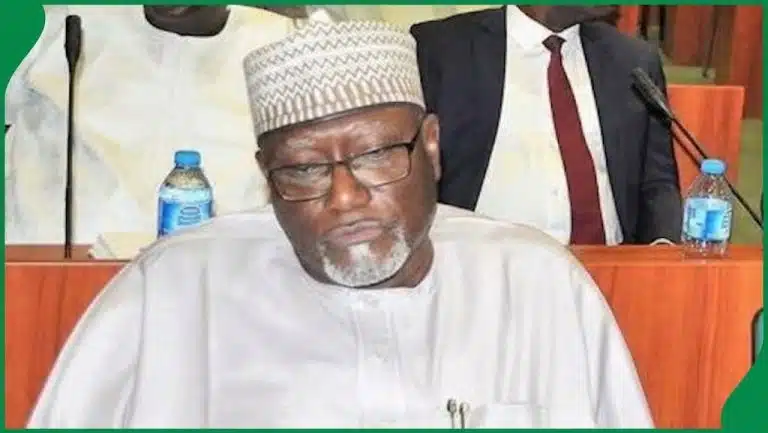
Former Director-General of the Department of State Services (DSS), Lawal Daura, has defended his controversial decision to shut the gates of Nigeria’s National Assembly during the administration of former President Muhammadu Buhari, insisting that he has no regrets about the action.
Daura made the disclosure while speaking during an interview with Channels Television, where he was asked about the circumstances surrounding the blockade and whether the then Acting President, Yemi Osinbajo, was aware of his decision.
The former intelligence chief said he did not require permission from either the President or the Acting President before taking an action he believed was necessary in the course of his responsibilities.
According to him, the decision was based on his assessment of the situation at the time and was not something for which he needed to seek prior authorisation from the country’s political leadership.
“No way. I don’t need any authority. That has nothing to do with it. I don’t need his permission. I don’t need the permission of the president to do what I think should be done,” Daura said.
Daura compares action to police officer responding to crime
The former DSS director-general further sought to justify his position by comparing the situation to the responsibilities of a police officer who witnesses a crime about to take place.
Daura argued that an officer who sees a crime being committed or is about to be committed would be expected to intervene rather than first seek permission from a superior officer before taking action.
“I give you an example: if a policeman sees a crime about to be committed in the street, is he supposed to go to a corner, call his commissioner of police or his DPO to say there’s a crime, what do I do?” he asked.
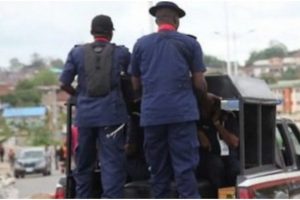
His comments come years after the dramatic incident in which security operatives took over the entrances to the National Assembly complex in Abuja, preventing lawmakers and other individuals from accessing the premises.
The development generated significant controversy at the time and attracted widespread criticism, with questions raised about the role of security agencies and the circumstances that led to the closure of the legislative complex.
‘I never regretted it’
When specifically asked whether he regretted ordering or overseeing the action, Daura was unequivocal in his response.
He maintained that he had no regrets about his role in the incident and indicated that he would make the same decision again if confronted with a similar situation under circumstances that, in his assessment, required such intervention.
“I never regretted it. I will never regret,” the former DSS boss said.
Daura, who later became a prominent political figure, is currently the vice-presidential candidate of the All Progressives Movement (APM).
His latest comments are likely to reignite discussions about the National Assembly blockade, the independence of Nigeria’s legislature and the extent of the powers available to security agencies when responding to perceived threats or emergencies.
The incident remains one of the notable controversies associated with the Buhari administration, particularly because of the questions it raised over the relationship between Nigeria’s security institutions and its democratic institutions.
Daura’s latest defence, however, suggests that he remains convinced that his decision at the time was justified by the circumstances he confronted.