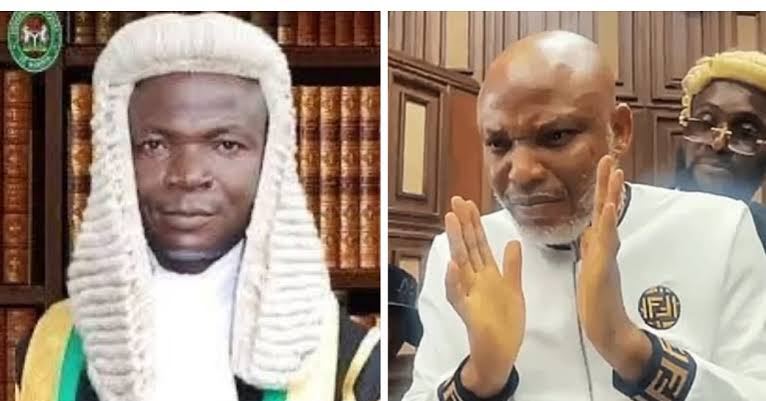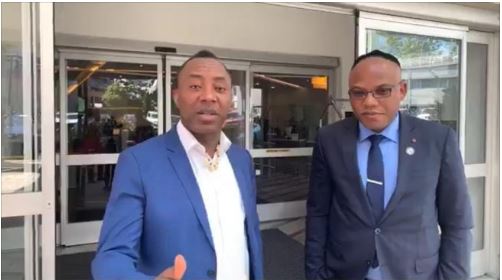
Former presidential candidate and activist Omoyele Sowore has alleged that the continued detention of Nnamdi Kanu is linked to his refusal to accept certain conditions which, according to him, were accepted by Yoruba nation agitator Sunday Igboho.
Sowore made the claim while speaking with journalists in Abuja, where he compared the political approaches of the two separatist figures and their interactions with the administration of Bola Ahmed Tinubu.
Comparison between Kanu and Igboho
According to Sowore, his recent encounter with Kanu strengthened his view that the two activists have taken very different paths in their political engagements with the Nigerian government.
He argued that Kanu’s refusal to compromise on certain issues may have contributed to his continued incarceration.
“Nnamdi Kanu is in jail today because he’s different from Sunday Igboho. If Kanu were like Sunday Igboho, he would be campaigning for President Tinubu in the Southeast now,” Sowore said.
He further alleged that both men were presented with similar terms over the years, but Kanu rejected them while Igboho accepted.
“Because it’s the same terms they gave to Igboho that he accepted and Kanu rejected over the last 10 years,” he added.
The activist also referred to a recent visit he made to Aba, noting that based on his experience with the IPOB leader, he believes it is inappropriate to compare the two figures.
Criticism of transactional politics
Sowore also used the opportunity to criticise what he described as “transactional politics” in Nigeria, warning that political decisions motivated by personal gain often end poorly.
He described Igboho’s political style as what he called “Amala politics,” suggesting that it reflects a culture of political bargaining or self-interest.
Reference to past political figures
While expressing concern about Igboho’s political trajectory, Sowore drew comparisons with controversial figures from Nigeria’s political history.
He mentioned the late politician Arthur Nzeribe, who once famously declared his support for former military ruler Ibrahim Babangida.
Sowore also referenced Daniel Kanu, who strongly supported former military leader Sani Abacha during the political controversies of the 1990s.
According to Sowore, aligning too closely with political authorities could damage an activist’s legacy.
“It’s like Daniel Kanu, who said if Abacha does not become president he would kill himself. Abacha has died and his political career died forever,” he said.
Warning about legacy
Sowore concluded by warning that activists who abandon their original ideals for political convenience risk being remembered negatively in history.
He suggested that if Igboho continues along the same path, it could affect how he is remembered both in Nigeria and internationally.