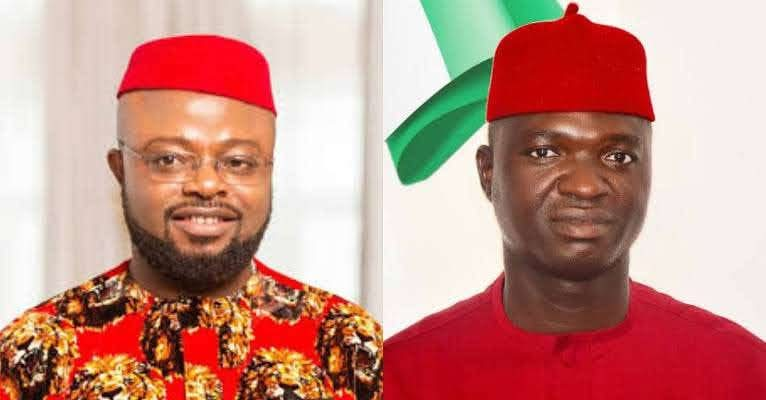
The growing clamour by political loyalists and beneficiaries of the present administration for Chief Ifeanyichukwu Odii, popularly known as Anyichuks, to abandon his governorship ambition in favour of Ebonyi State Governor Francis Nwifuru may soon face its ultimate test.
Rather than engage in endless political arguments, propaganda and sponsored commentaries, Ebonyians deserve an opportunity to assess both men on their records, ideas, competence and vision for the state’s future.
That opportunity is now within reach.
Odii has challenged Nwifuru to a public debate. What better platform could a sitting governor ask for to defend his administration, explain his achievements and convince the electorate that he deserves another four years in office?
Those who have repeatedly urged Odii to step down should encourage their principal to accept the challenge. If they genuinely believe Nwifuru has performed exceptionally well, a public debate should provide the perfect opportunity to demonstrate it.
After all, Nwifuru has governed Ebonyi State since 2023. He has exercised executive authority, controlled public resources and had considerable time to demonstrate his capacity to deliver meaningful development.
Odii, on the other hand, is a businessman whose supporters point to his philanthropic interventions, including housing support for less privileged people, educational bursaries and scholarships, and other community-based initiatives.
If Odii has made such contributions through his private resources, Ebonyians have every reason to ask what he intends to achieve with the much larger resources available to a state government.
That question deserves a serious answer.
Why Nwifuru Should Accept the Challenge
Nwifuru has the advantage of incumbency. He has access to government records, firsthand knowledge of policy decisions and the opportunity to present verifiable evidence of his administration’s achievements.
He is also a lawyer who has previously served as Speaker of the Ebonyi State House of Assembly. Those experiences should provide a strong foundation for defending his record in an open debate.
On paper, therefore, the governor appears well-positioned to confront his challenger.
But Odii has issued the challenge, and the ball is now in Nwifuru’s court.
Ebonyians are waiting. The governor’s response is all that is needed before the organisers can agree on a date, venue, independent moderators and rules for the exercise.
Both men should appear before an impartial panel, present their records, explain their programmes and answer questions from credible representatives of the public.
The objective should not be to humiliate either candidate but to establish who possesses the stronger ideas, greater capacity and more credible plans for Ebonyi State.
If Nwifuru convincingly demonstrates that his administration has delivered and has a better roadmap for the future, he should be able to make that case before the electorate.
If Odii presents a more convincing alternative, those demanding his withdrawal should reconsider their position.
The electorate, rather than political loyalists, should ultimately determine who deserves its support.
Vanco Flyover: What Happened to the Project?
One issue that deserves serious attention is the Vanco Flyover project.
Nwifuru should be prepared to explain the project’s current status, the amount of public money committed to it, its original completion timeline and the reasons for any delays.
He should also clarify the extent of demolition carried out to accommodate the project, the compensation arrangements for affected property owners and businesses, and the economic consequences for traders, motorists and other residents.
If the project has experienced delays, what accounts for them? Are the challenges related to funding, technical design, contractual disagreements, construction difficulties or other factors?
These are legitimate questions for a government that must account for public expenditure.
Former Governor David Umahi oversaw the construction of several flyovers during his tenure. That record naturally invites comparisons and raises questions about the planning and execution of major infrastructure projects under the current administration.
However, the relevant issue is not simply whether one governor built more flyovers than another. It is whether public projects are properly planned, efficiently executed, completed within reasonable timelines and delivered at a cost that represents value for money.
Nwifuru should be ready to explain how Vanco fits into that standard.
Ebonyi Air: Where Are the Aircraft?
Another issue that deserves scrutiny is the reported acquisition of three aircraft for the proposed Ebonyi Air project.
If payments have been made or contractual commitments entered into, Ebonyians deserve clear information about the arrangements.
What is the status of the aircraft? Were contracts signed? What delivery timelines were agreed upon? How much has the state committed to the project, and what steps have been taken towards operationalising the proposed airline?
If the original timeline has changed, the government should explain why.
These are not unreasonable demands. Publicly announced investments should be accompanied by transparent information about their implementation.
The debate would provide an opportunity for Nwifuru to present documentary evidence, clarify the project’s progress and explain the administration’s expectations for its economic benefits.
Ebonyians should not have to rely solely on political statements to understand the status of a major public investment.
Nkalagu Cement Factory: Promises Versus Practical Realities
The proposed cement factory at Nkalagu is another issue that should feature prominently in the debate.
A cement factory is a capital-intensive industrial undertaking requiring substantial investment, reliable energy supplies, appropriate infrastructure, proven mineral reserves and the necessary regulatory approvals.
Where limestone extraction is involved, the project’s viability also depends on geological assessments, geophysical investigations, drilling, laboratory analysis and the establishment of commercially exploitable deposits.
The legal status of the relevant mining rights must also be clear.
The government should therefore explain the project’s current stage, the status of any required mining licences, the arrangements for financing and construction, and the anticipated timeline for production.
Questions have also been raised about existing mineral rights reportedly associated with Ibeto. The government should clarify the legal position and explain how any existing rights affect its plans for the proposed project.
These issues must be resolved through verifiable documentation rather than political assurances.
As a businessman, Odii should be interested in examining the project’s commercial assumptions, financing structure and implementation strategy.
The debate could help establish whether the proposed cement factory rests on a credible industrial development plan or whether important questions remain unanswered.
Ebonyians deserve to know the difference between announcing an investment and delivering one.
Political Intimidation and the Safety of Opposition Figures
Beyond infrastructure and industrial development lies another issue of considerable importance: the political atmosphere in Ebonyi State.
Questions have been raised about allegations of intimidation and violence involving opposition figures under the present administration.
Nwifuru should be given an opportunity to address concerns surrounding reports that local government chairmen were warned about the consequences of failing to deliver their respective areas politically.
If such remarks were made, what precisely was meant by delivering a local government area?
In a democracy, local government officials have responsibilities to their constituents that extend beyond securing political victories for those in power.
Political competition should not become a source of fear for citizens who choose to support opposition parties.
Reports of violent incidents involving opposition figures in Ohaukwu, Ezza South, Onicha and Ivo have also raised concerns that warrant credible investigation.
Responsibility for any particular attack must be established through evidence, not political speculation. Nevertheless, the government has a duty to protect residents, investigate reported violence and ensure that political disagreements do not threaten public safety.
The debate should therefore address what measures the administration has taken to protect political opponents, prevent electoral violence and guarantee freedom of political association.
Why should citizens fear expressing support for a different candidate?
Why should opposition activities become a source of tension in a democratic society?
And what assurances can the governor provide that political competition ahead of the 2027 elections will be peaceful and free from intimidation?
These are questions of democratic accountability, and they deserve direct answers.
Has Ebonyi Made Sufficient Progress Since 2023?
The proposed debate should also examine the broader performance of the Nwifuru administration.
What measurable progress has Ebonyi made in employment generation, industrialisation, infrastructure, healthcare, education and economic empowerment since 2023?
Which projects have been completed? How many jobs have been created? What improvements have occurred in access to essential services? How effectively have public resources been deployed?
The answers should be supported by verifiable figures, project records and independent assessments wherever possible.
A government cannot adequately defend its performance through newspaper advertisements, television appearances by political appointees or repeated declarations of success.
It must demonstrate results.
The debate should provide an opportunity to compare the administration’s promises with its actual achievements and identify areas where further work is required.
This is not an argument against government publicity. It is an argument for evidence-based public communication.
Ebonyians deserve to know what has been achieved, what remains unfinished and what the government intends to do differently.
Odii Must Also Present a Credible Alternative
While Nwifuru should be prepared to defend his record, Odii must also demonstrate that his ambition is supported by a practical development agenda.
Private-sector success and philanthropy can offer valuable experience, but governing a state requires more than business acumen or personal generosity.
Odii should explain how he intends to manage public finances, strengthen institutions, improve healthcare and education, attract investment, create jobs and ensure that development reaches rural communities.
He should also outline his approach to security, infrastructure, industrialisation and the effective management of government projects.
Most importantly, he must show how his experience as a businessman would translate into accountable and efficient public administration.
The debate should not become a contest of personalities or an opportunity for either candidate to make unsubstantiated accusations against the other.
It should be a contest of policies, records, ideas and demonstrated capacity.
Both men should be held to the same standard.
Let Ebonyians Decide
For too long, political debates have often been reduced to exchanges between supporters, personal attacks and arguments over who should withdraw from the race.
A public debate offers a more constructive alternative.
Let Nwifuru explain his administration’s record, defend its policies and present his plans for another term.
Let Odii explain why he believes he can govern Ebonyi more effectively and demonstrate how his proposed policies would improve the lives of residents.
Let independent moderators ask difficult questions, insist on evidence and give both candidates equal opportunities to respond.
The debate should be broadcast widely so that Ebonyians at home and in the diaspora can follow the proceedings and make informed decisions.
Ultimately, neither political loyalists nor campaign organisations should determine who steps down for whom. That decision belongs to the candidates themselves, while the choice of who governs belongs to the electorate.
If Nwifuru believes his achievements speak for themselves, he should welcome the opportunity to demonstrate them.
If Odii believes he offers a better alternative, he should be prepared to defend his vision under the same scrutiny.
The challenge has been issued. The stage is waiting.
Governor Nwifuru should accept the invitation, agree on a date and face Odii in a public debate.
Between Odii and Nwifuru, who should actually step down?
Rather than allow political loyalists to answer that question through propaganda, let both men make their case before the people.
Let the debate hold. Let the candidates speak. Let Ebonyians judge.