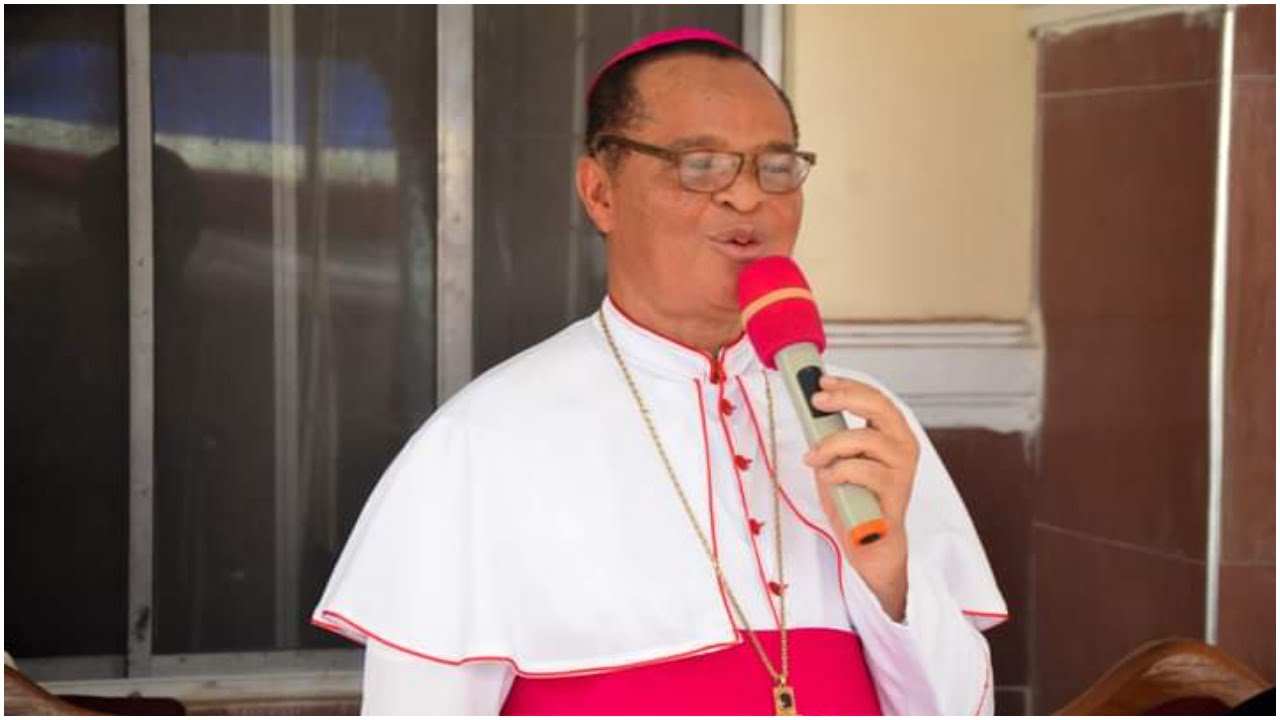
The Archbishop of Owerri Ecclesiastical Province, Most Rev. Lucius Ugorji, has described the persistent persecution of Christians in Nigeria as a major national concern, saying the issue is driven by a complex combination of religious, ethnic and economic factors.
Ugorji made the remarks while delivering an address at the 18th annual conference of the Association of Papal Knights and Medalists in Nigeria (APKMN).
He described the alleged persecution of Christians, which some have characterised as Christian genocide, as one of the most widely debated issues in the country.
According to him, international observers, human rights organisations, religious leaders and government officials hold differing views on whether the escalating violence in Nigeria amounts to targeted persecution of Christians or reflects the breakdown of the country’s security system.
The Archbishop recalled that on October 13, 2025, United States President Donald Trump designated Nigeria a Country of Particular Concern (CPC) over alleged recurring violations of religious freedom and attacks on Christian communities.
He said the designation was made under the International Religious Freedom Act of 1998.
Ugorji also cited organisations such as Open Doors and International Christian Concern (ICC), which have repeatedly identified Nigeria as one of the most dangerous countries for Christians.
He said the concerns were linked to deadly attacks on Christian communities, churches and schools, particularly in the Middle Belt and northern parts of the country.
According to him, the attacks by heavily armed groups have resulted in mass abductions of Christians, including Catholic priests, for huge ransoms, as well as killings, injuries and the displacement of thousands of people from their ancestral homes.
He stated:
“Underpinning this perspective are the frequent deadly assaults on Christian towns and villages, churches and schools, particularly in the Middle Belt region and northern states, by heavily armed persons, leading to mass kidnappings of Christians, including priests, for huge ransoms, as well as the maiming and slaughtering of thousands in cold blood, the uprooting of vast Christian populations from their ancestral lands and sources of livelihood.”
The Metropolitan Archbishop of Owerri further expressed concern over the conditions of millions of displaced persons living in internally displaced persons (IDP) camps and the disruption of education for thousands of children in affected communities.
He also alleged that Christians in some northern states faced restrictions in obtaining permits to construct churches.
Ugorji cited the demolition of churches by urban planning authorities in parts of Zamfara State, describing the reasons given for some of the actions as flawed.
He also raised concerns over the alleged use of Sharia law provisions to discriminate against, harass and penalise Christians, questioning such practices despite claims that the legal system applies exclusively to Muslims.
The Archbishop argued that religious freedom and the secular nature of Nigeria were constitutional values that should be respected.
Maintaining that every human being possesses inherent dignity and fundamental rights, including the right to life, ownership of property and freedom of religion, Ugorji called on Christian communities across the country to intensify prayers for peace and security.
Meanwhile, the Papal Nuncio to Nigeria, Archbishop Michael Francis Crotty, said Christians had historically experienced persecution in the country, particularly in the northern region.
He urged Christians to respond to the challenges through democratic participation and engagement, especially as Nigeria prepares for another electoral exercise.
Crotty also stressed the need to end the persecution of Christians across the country.
Earlier, the National President of APKMN, Steve Adehi, appreciated the presence of archbishops, bishops and other dignitaries at the conference.
He said the theme of the anniversary, “Papal Knights and Strategic Engagement in Addressing Christian Persecution in Nigeria”, reflected the challenges confronting Christians and demonstrated the association’s commitment to the welfare of the Church.
Adehi also appealed to the Papal Nuncio to approve the recruitment of new members to expand the association’s membership, assuring that the organisation would continue to serve the Church with humility.
In their separate remarks, the Bishop of Makurdi Diocese, Most Rev. Wilfred Chikpa Anagbe, and the National Chaplain of the association, Rev. Fr. Michael Adegbola, declared that the time for what they described as political pretence over Christian persecution was over.
They also criticised the government’s approach to the displacement crisis, arguing that authorities appeared more focused on establishing additional IDP camps than creating conditions for displaced Nigerians to return safely to their ancestral communities.