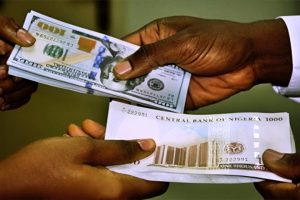
The exchange rate between the US dollar (USD) and the Nigerian naira (NGN) has continued to fluctuate, reflecting market dynamics across both the parallel (black market) and official exchange windows.
As of Wednesday, February 26, 2025, the exchange rates are as follows:
Black Market (Parallel Market) Rates
In the Lagos Parallel Market, commonly referred to as the Black Market, currency traders, also known as Bureau De Change (BDC) operators, are buying the US dollar at ₦1,485 per dollar and selling it at ₦1,495 per dollar.
This indicates a slight appreciation of the naira compared to the previous day’s rate when it traded at ₦1,500 per dollar. Despite these movements, fluctuations in the black market remain influenced by factors such as forex demand, availability of dollars, and overall economic conditions.
Central Bank of Nigeria (CBN) Official Exchange Rate
The Central Bank of Nigeria (CBN), which regulates foreign exchange transactions, has set the official exchange rate at ₦1,495.91 per dollar. This marks a minor strengthening of the naira from ₦1,497.11 per dollar recorded on Monday, February 24, 2025.
It is important to note that the CBN does not recognize the black market, as it has repeatedly advised individuals and businesses requiring forex to source it legally through authorized financial institutions, particularly banks.
Key Factors Influencing Naira Exchange Rate Movements
The fluctuations in the naira-to-dollar exchange rate are driven by several factors, including:
- Foreign Exchange Reserves: Nigeria’s forex reserves significantly impact the naira’s stability. A decline in reserves limits the CBN’s ability to intervene in the forex market, leading to increased pressure on the naira.
- Inflation and Economic Stability: Rising inflation weakens purchasing power and affects investor confidence, indirectly influencing exchange rates.
- Demand and Supply Dynamics: High demand for dollars, especially from importers, businesses, and travelers, often leads to naira depreciation. Conversely, increased forex inflows, such as remittances and foreign investments, help strengthen the currency.
- Government and CBN Policies: Measures such as forex restrictions, intervention strategies, and monetary policies significantly shape exchange rate trends.
Why Forex Rates Differ Across Markets
The difference between the black market and official exchange rates exists primarily due to foreign currency shortages in the official market and restrictions imposed by the CBN on accessing forex for certain transactions.
While the CBN’s official rate applies to regulated transactions, individuals and businesses facing difficulties obtaining forex through banks often turn to the parallel market, where supply and demand dictate pricing.
Conclusion
The naira’s exchange rate remains a crucial indicator of Nigeria’s economic health. While the recent appreciation in the black market and official exchange rates is a positive sign, forex market trends are still susceptible to domestic and global economic conditions.
It is advisable for businesses and individuals engaging in forex transactions to stay informed about market trends and consider authorized channels for currency exchange to mitigate risks associated with volatility.