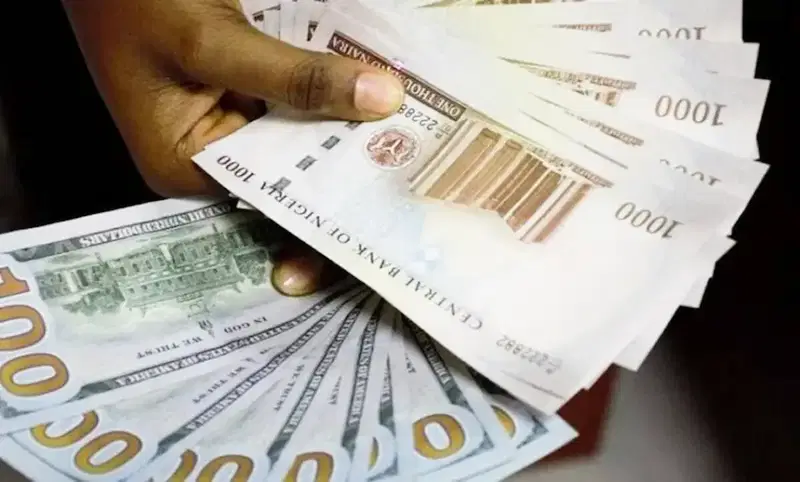
The Nigerian naira continued to face pressure in the unofficial foreign exchange market on Thursday, March 26, 2026, as the value of the local currency weakened further against the United States dollar.
Checks from currency traders in Lagos, particularly within the Bureau De Change (BDC) segment of the parallel market commonly referred to as the black market or Aboki FX indicate that the dollar was sold at an average rate of ₦1,425, while buyers purchased the greenback at approximately ₦1,410.
The widening gap between the buying and selling rates highlights ongoing volatility in Nigeria’s foreign exchange space, driven largely by demand pressures, limited dollar supply, and broader macroeconomic uncertainties.
Parallel Market Remains Unofficial
Despite the heavy reliance on the black market by individuals and small businesses, the Central Bank of Nigeria (CBN) continues to distance itself from the parallel market. The apex bank has repeatedly emphasized that it does not recognize the segment as a legitimate channel for foreign exchange transactions.
Instead, the CBN has consistently advised Nigerians seeking forex for personal or business purposes to utilize official channels, such as commercial banks and other authorized financial institutions.
Official CBN Exchange Rate
In contrast to the parallel market, data from the official window shows relatively lower exchange rates. As of the same day, the dollar traded within a range of ₦1,375 to ₦1,391 at the official market.
This disparity between the official and black market rates underscores the persistent challenges in Nigeria’s foreign exchange management, including liquidity constraints and speculative activities.
Market Dynamics and Variations
It is important to note that exchange rates in the parallel market are not fixed and can vary significantly depending on location, transaction volume, and negotiation between buyers and sellers. As a result, the actual rate at which individuals purchase or sell foreign currency may differ slightly from the figures reported.
Broader Economic Implications
The sustained pressure on the naira has continued to impact the cost of imports, inflation levels, and overall purchasing power in the country. Analysts warn that unless there is a significant improvement in dollar inflows through exports, foreign investment, or remittances the local currency may remain vulnerable to further depreciation.