The Ebonyi State Government has come under scrutiny following allegations that clerical officers at the Government House, Centenary City, have been restricting the submission of official correspondence by members of the public.
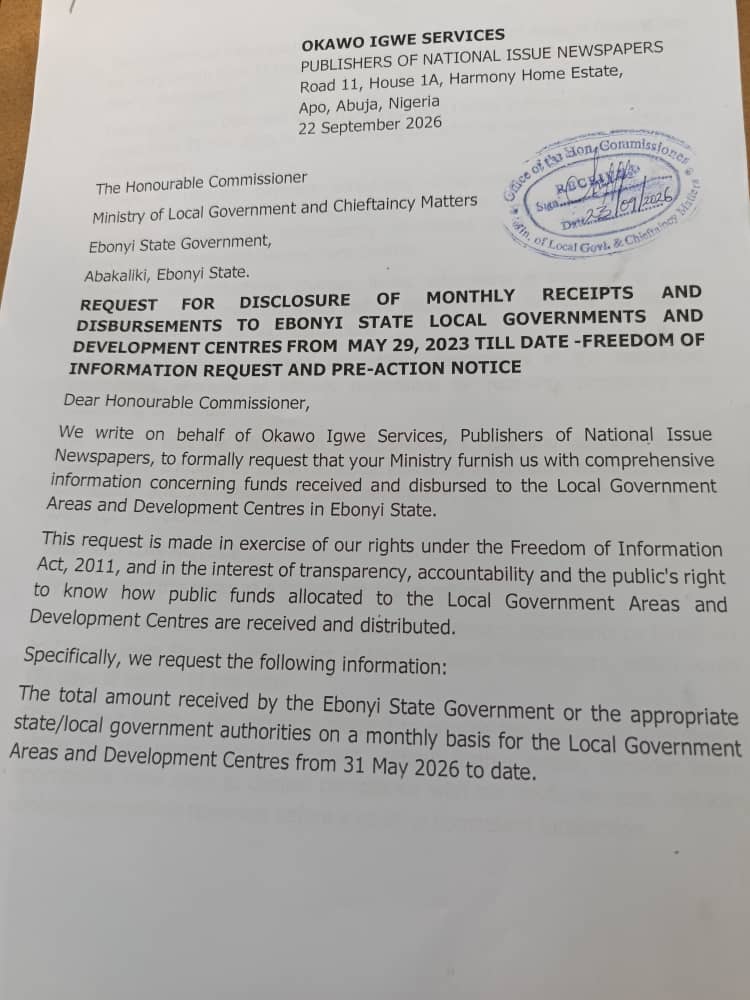
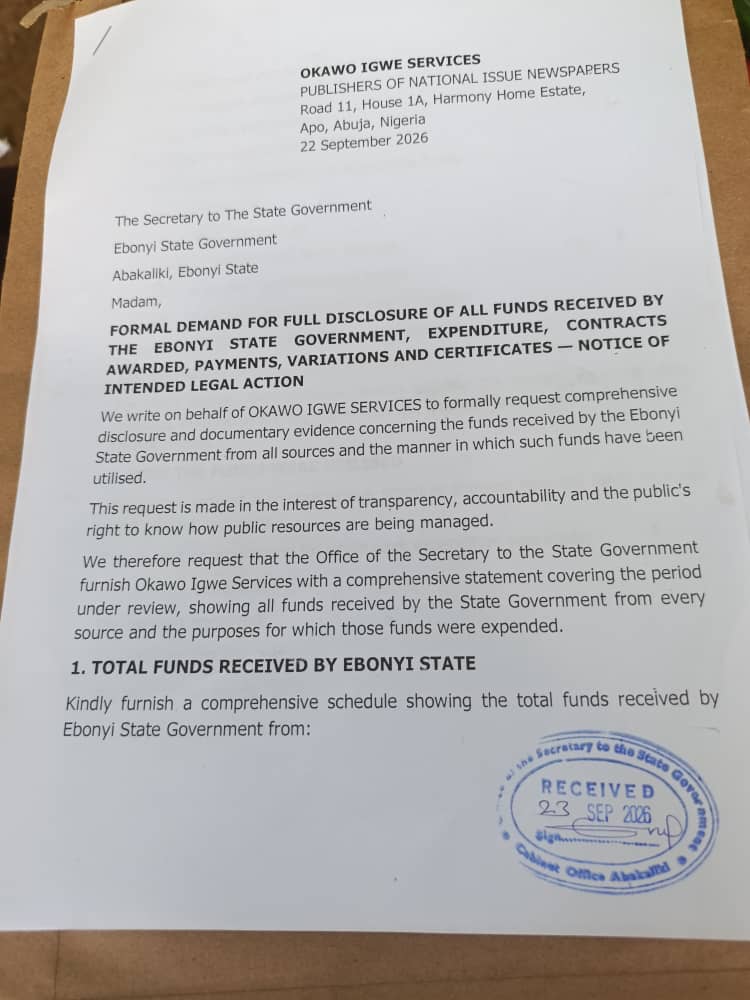
The development reportedly followed a Freedom of Information (FOI) request by the management of National Issue Newspapers, seeking comprehensive details of the state’s total revenue accruals between June 30, 2023, and October 2026.
The newspaper had formally approached the state government under the provisions of the Freedom of Information Act, 2011, requesting details of the revenue received during the period. The request was subsequently followed by a pre-action notice.
However, concerns have emerged over reports that clerical officers at the Government House are allegedly reluctant to receive memoranda and other official documents from individuals who are not government officials.
Sources within the Government House claimed that correspondence brought by government officials is subjected to preliminary scrutiny before acceptance, while some members of the public have reportedly encountered difficulties submitting their documents.
The alleged development has left several visitors stranded at the Centenary City Government House, raising questions about public access to government offices and the channels available for communicating with the state administration.
It remains unclear whether the alleged restriction was introduced through an official government directive or resulted from an administrative decision by officials at the Government House.
Meanwhile, legal consultants to National Issue Newspapers have cautioned the state government against taking any action that could obstruct the lawful submission of correspondence.
They argued that government offices must remain accessible to members of the public, insisting that the issuance of a pre-action notice should not be treated as justification for restricting the receipt of official documents.
The legal consultants also pointed out that established legal procedures provide several channels for serving court processes and other legal documents on government institutions.
According to them, restricting ordinary correspondence would neither prevent legal proceedings nor address the newspaper’s request for information about the state’s revenue.
The controversy has further intensified public interest in transparency, accountability and the right of citizens to obtain information about the management of public resources.
The Freedom of Information Act, 2011, was enacted to promote openness in governance and strengthen public accountability by granting citizens access to information held by public institutions.
As the situation develops, the Ebonyi State Government is expected to clarify whether any official directive has been issued concerning the acceptance of correspondence at the Government House.
At the centre of the dispute is a straightforward question: How much revenue accrued to Ebonyi State between June 30, 2023, and October 2026, and why has a request for information about public funds become a subject of controversy?
National Issue Newspapers is seeking answers from the state government, while the alleged restriction on correspondence has raised fresh concerns about administrative openness and public accountability.