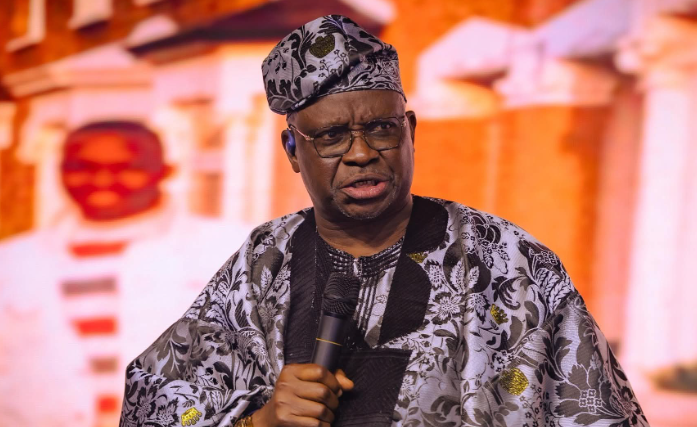
The newly appointed Chairman of the Rural Electrification Agency (REA), Ayo Fayose, has linked Nigeria’s rising population to the country’s persistent electricity challenges.
Fayose made the remarks on Friday, August 7, 2026, while speaking after assuming office as chairman of the agency.
According to him, the lack of reliable electricity has significant effects on the way Nigerians spend their evenings, particularly in communities where power supply remains inadequate.
He argued that when electricity is unavailable and darkness sets in early, many people are forced to remain indoors, resulting in more people going to bed earlier.
Fayose said the situation could indirectly contribute to population growth, as people have fewer opportunities for entertainment, recreation and social activities outside their homes.
He explained that the lack of electricity means that by early evening, many Nigerians are already preparing to stay indoors because there are limited activities they can engage in outside their homes.
“When you don’t address the issue of electricity, by 7 o’clock it gets dark, and people start engaging with their wives, so the population doubles,” Fayose said.
He added that the issue was not simply about providing electricity for household use, but also about creating an environment where people could remain active beyond their homes after sunset.
Fayose said reliable electricity would help encourage nightlife, recreation and other social activities, thereby giving people more options for how to spend their evenings.
“The simple problem is that, because there is no electricity, people go to bed early. Their minds are already prepared for it. If this is the only option available, they simply stay at home,” he said.
The REA chairman further argued that addressing Nigeria’s electricity deficit could transform the daily lives of citizens, particularly in communities that experience prolonged power outages.
“But if we address the electricity problem, there will be nightlife. There will be recreation outside your wife,” he added.
Fayose’s comments come amid ongoing efforts by the Federal Government to expand electricity access across the country through the Rural Electrification Agency and other power-sector initiatives.
The REA is responsible for promoting and coordinating efforts to provide electricity to underserved and unserved communities, particularly in rural areas.
Access to reliable electricity remains a major challenge in many parts of Nigeria, with inadequate generation, transmission constraints, distribution challenges and limited access in rural communities continuing to affect economic and social activities.
Poor electricity supply has also been identified as a major obstacle to businesses, healthcare services, education and other essential activities, particularly in communities that depend heavily on alternative sources of power.
With Fayose now assuming leadership of the REA, attention is expected to focus on how the agency can accelerate the expansion of electricity access to communities that remain outside the national grid or receive inadequate power supply.
His remarks also highlight the broader social implications of Nigeria’s electricity crisis, which extends beyond households and businesses to affect recreation, social interaction and the general quality of life.
The new REA leadership will therefore face the task of helping to expand access to dependable electricity while supporting initiatives aimed at improving economic opportunities and living conditions in underserved communities.