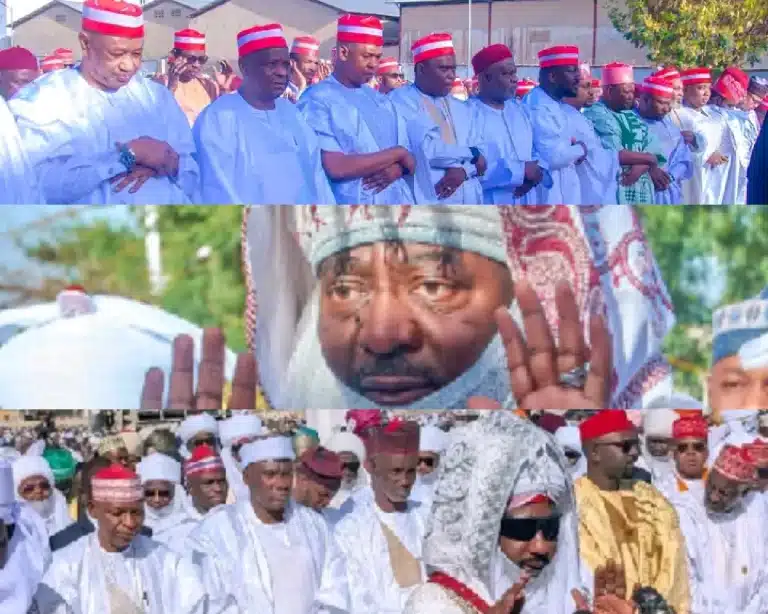
Kano witnessed an unprecedented turn of events during the Eid-el-Fitr celebrations, as three separate congregational prayers were held across the city highlighting growing divisions among traditional rulers and political figures.
For decades, Eid in Kano had been marked by a single, unified prayer bringing together the Emir, government officials, and the public. However, this year’s development signals a sharp break from that long-standing tradition.
Sanusi II Leads Prayer at Kofar Mata
The 16th Emir of Kano, Muhammadu Sanusi II, led one of the Eid prayers at the historic Kofar Mata Eid Ground at about 8:00 a.m.
The gathering drew key government figures, including Governor Abba Kabir Yusuf, Secretary to the State Government Umar Faruq Ibrahim, and Commissioner of Police Ibrahim Adamu Bakori.
According to Sanusi’s associate, Muhammad Dallatu, the sermon centered on unity, tolerance, and peaceful coexistence among residents.
Bayero Holds Parallel Prayer
At the same time, the 15th Emir, Aminu Ado Bayero, presided over a separate Eid prayer at the Nasarawa Palace. The prayer was led by Sheikh Kamaluddeen Albasa and similarly emphasized peace, unity, and stability.
His spokesperson, Abubakar Balarabe Kofar Na’isa, confirmed the attendance of notable dignitaries such as Baffa Babba Dan Agundi and former SSG Usman Alhaji.
Kwankwaso Hosts Separate Gathering
In a third development, the leader of the Kwankwasiyya Movement, Rabiu Musa Kwankwaso, held another Eid prayer at his private mosque along Miller Road.
He was joined by Deputy Governor Aminu Abdussalam Gwarzo, former commissioner Yusuf Abdullahi Kofar Mata, and several loyalists.
According to his aide, Saifullahi Hassan, the gathering was conducted in a calm atmosphere focused on gratitude and unity.
Roots of the Division
The emergence of multiple Eid prayers reflects the ongoing emirate crisis in Kano. The dispute dates back to 2020, when Sanusi II was dethroned and Bayero installed as Emir.
Tensions deepened in 2024 following Sanusi’s reinstatement, effectively creating parallel royal authorities and rival loyalties within the state.
Political dynamics have further complicated the situation, particularly the recent realignments involving Governor Yusuf and shifting party affiliations between the New Nigeria Peoples Party and the All Progressives Congress.
A Break from Tradition
Historically, Eid prayers in Kano served as a powerful symbol of unity, bringing together religious leaders, political actors, and citizens under one congregation.
This year’s fragmentation, however, underscores the depth of the current crisis raising concerns about social cohesion and the future of traditional authority in one of northern Nigeria’s most influential emirates.