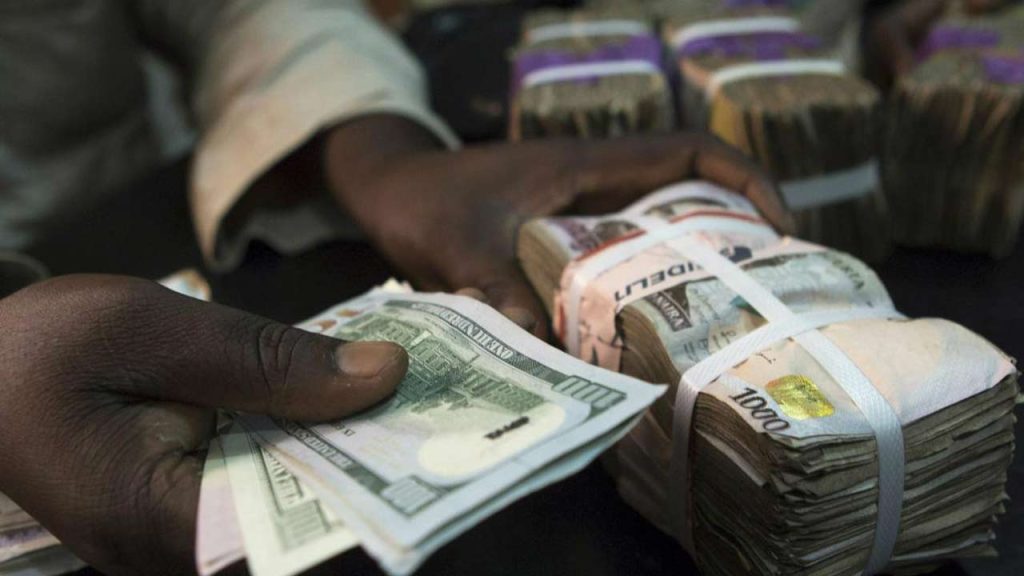
The naira continued to trade under pressure in the parallel foreign exchange market on Friday, February 13, 2026, with the United States dollar exchanging at an average selling rate of ₦1,440 and a buying rate of ₦1,420, according to currency dealers operating in Lagos.
Sources within the Bureau De Change (BDC) segment said demand for the greenback remained strong among importers, travelers, and individuals seeking quick access to foreign currency outside the formal banking system.
Parallel Market (Black Market) Rates
| Currency Pair | Buying Rate | Selling Rate |
|---|---|---|
| USD/NGN | ₦1,420 | ₦1,440 |
Official Market Rates
Data from the Central Bank of Nigeria showed that at the official window, the naira traded within a narrower band:
| Currency Pair | Highest Rate | Lowest Rate |
|---|---|---|
| USD/NGN | ₦1,358 | ₦1,353 |
CBN موقف on Parallel Market Transactions
The apex bank has consistently maintained that it does not recognize the parallel market, warning that foreign exchange transactions should be conducted through authorized financial institutions. The CBN has advised individuals and businesses seeking forex to apply through commercial banks and other approved channels.
Why the Gap Between Official and Black Market Rates Persists
Financial analysts say the disparity between the official and parallel market rates is driven by several structural factors:
- Limited forex supply in the formal window relative to demand
- Backlog of unmet FX requests from businesses and individuals
- Speculative activities and precautionary dollar hoarding
- Faster access to cash dollars in the informal market despite higher costs
Because of these dynamics, the black market often reacts more quickly to real-time demand pressures, while the official rate reflects regulated trading influenced by policy interventions.
Exchange Rates May Vary
Currency traders caution that forex prices are highly volatile and may differ from one location or dealer to another. The rates quoted above represent average market observations and may change within hours depending on supply, demand, and transaction volume.