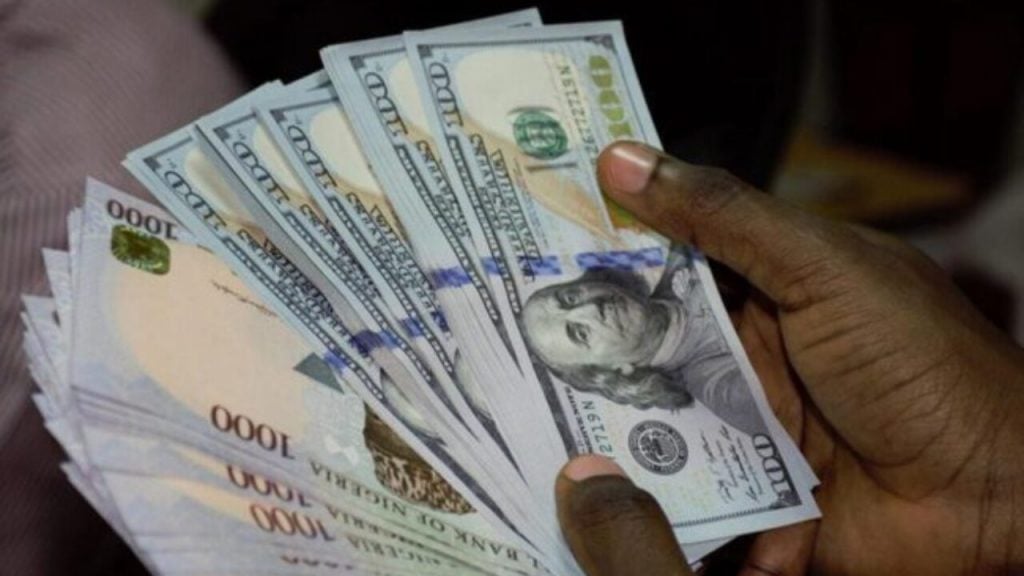
The Nigerian naira experienced a significant depreciation on Thursday, April 3, 2025, falling to ₦1,552.53 per US dollar at the official exchange window.
This represents a ₦21.28 decline from the previous day’s rate of ₦1,531.25, according to official data from the Central Bank of Nigeria (CBN).
This marks the steepest single-day drop in the naira’s value since March 22, 2025, when it depreciated by ₦18.96 in one day.
The currency also saw weakness in the parallel market, commonly referred to as the black market, where it traded at ₦1,560 per dollar, slipping from ₦1,555 recorded on Wednesday. This ₦5 drop adds to growing concerns over exchange rate stability, despite recent improvements in the country’s external reserves.
Strong FX Reserves, Weak Currency
Ironically, this depreciation comes just as the Central Bank of Nigeria announced that the country’s Net Foreign Exchange Reserves had climbed to $23.11 billion as of December 31, 2024—its highest level in over three years. The reserves had been steadily growing in recent months, driven by oil revenue inflows and CBN’s FX management reforms.
Despite this progress, the naira’s performance continues to be affected by both local economic pressures and external factors.
Global Trade Shock: Trump’s Tariff Hike
Economic analysts have linked the naira’s sharp decline, in part, to recent global trade developments. Former U.S. President Donald Trump, in a statement on Wednesday, announced the introduction of 10 percent baseline tariffs on a broad range of imports, sparking global market anxiety. The new tariff regime could potentially impact over $10 billion worth of trade between Nigeria and the United States, according to trade analysts.
Dr. Muda Yusuf, CEO of the Centre for the Promotion of Private Enterprise (CPPE), warned that the new U.S. tariffs could harm Nigeria’s economic interests, particularly if it disrupts the African Growth and Opportunity Act (AGOA), which previously provided Nigerian exporters preferential access to the U.S. market.
“This development could have serious implications for the naira exchange rate and for Nigerian exports to the U.S.,” Yusuf said in a statement on Thursday.
Outlook
The naira’s continued volatility, despite healthier foreign reserves, points to the underlying fragility of Nigeria’s economy. Analysts say that unless global economic shocks are mitigated and domestic reforms intensified, the naira will remain vulnerable in both official and unofficial markets.
As of now, currency traders and businesses are bracing for further fluctuations, with expectations of more policy responses from the CBN in the days ahead.