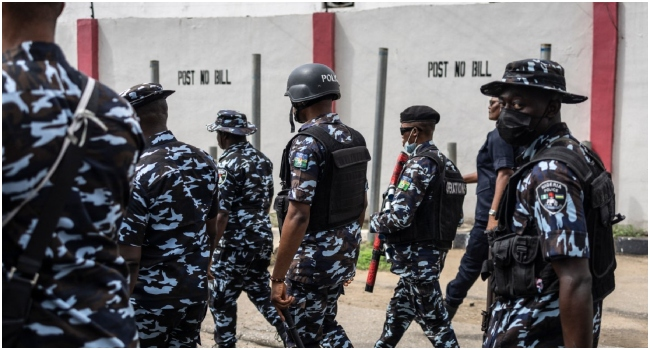
The Nigeria Police Force has come under intense public scrutiny following its rapid arrest of a content creator who posted a misleading video about a terrorist invasion in Abuja, while critics point to a perceived lack of similar urgency in tracking down real criminals openly displaying illicit activities online.
Authorities in the Federal Capital Territory acted within hours to locate and detain the individual after he shared a doctored video suggesting that terrorists had invaded the nation’s capital. The clip, which featured edited gunfire sounds layered over unrelated footage, was described by police as false and capable of inciting panic among residents.
In a video message, the FCT Commissioner of Police confirmed that forensic investigators were able to trace the origin of the post swiftly, leading to the creator’s arrest. The police subsequently used the incident to caution the public against spreading misinformation that could trigger fear or unrest.
However, the development has sparked backlash, with many Nigerians questioning what they describe as a double standard in enforcement.
Among the critics is OurFaveOnlineDoc, a British-Nigerian physician and online commentator, who argued that while authorities demonstrated the capacity to quickly track down a civilian over a false post, the same efficiency is not evident in dealing with terrorists who openly share incriminating content online.
In a post on X (formerly Twitter), he pointed out that individuals linked to kidnapping networks have, on several occasions, posted videos on platforms like TikTok showing large sums of ransom money and weapons—often without concealing their identities.
According to him, the contrast suggests that security agencies possess the technical capability to trace such individuals but may not be applying it consistently where it matters most.
His comments have resonated with many Nigerians, reigniting long-standing concerns over how security threats are handled in the digital space. Several users highlighted instances where suspected criminals appeared brazen in online videos, sometimes operating active accounts for extended periods without apparent consequences.
Critics argue that the same digital tracking tools deployed in the Abuja misinformation case could be used more aggressively to identify and apprehend individuals involved in kidnapping and terrorism.
As of the time of reporting, the police have not issued a direct response to these concerns.
Meanwhile, authorities maintain that the arrest of the content creator is part of broader efforts to combat the spread of false information capable of undermining public confidence and security, particularly in the Federal Capital Territory.
The situation has further fueled debate about enforcement priorities, as Nigerians continue to demand stronger action not only against misinformation but also against real and ongoing security threats across the country.