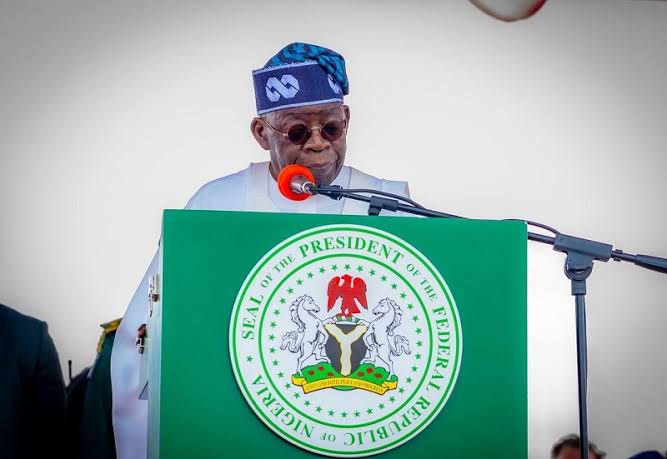
The Presidency has dismissed claims that President Bola Tinubu borrowed ₦120 trillion within three years of assuming office, describing the figures circulating on social media as misleading and inaccurate.
The Special Assistant to the President on Social Media, Dada Olusegun, made the clarification in a statement published on X on Sunday, November 8, 2026, accusing opposition groups of using misleading figures to discredit the administration.
A viral graphic had alleged that 16 Nigerian leaders borrowed a combined ₦46 trillion over 63 years, while Tinubu accumulated ₦120 trillion in loans within just three years, despite removing the petrol subsidy.
However, Olusegun argued that the comparison failed to account for previously unrecognised government liabilities and the impact of exchange rate adjustments on Nigeria’s existing foreign debt.
He explained that Nigeria’s public debt stood at ₦46 trillion at the end of 2022, but the figure excluded ₦22.7 trillion in Central Bank of Nigeria (CBN) Ways and Means advances, which the Federal Government officially recognised in May 2023.
The presidential aide also faulted the exchange rate used in previous debt calculations, noting that the country’s foreign debt had been converted at ₦448 to the dollar, even though the parallel market exchange rate had exceeded ₦700 at the time.
According to him, the unification of the exchange rate in June 2023 increased the naira value of Nigeria’s existing dollar-denominated debt by ₦13.4 trillion on paper.
He maintained that the increase did not represent fresh dollar borrowing by the Federal Government but rather reflected the impact of currency depreciation on existing external obligations.
Olusegun further stated that Nigeria’s public debt increased from $113.4 billion in June 2023 to $120.9 billion in June 2026, representing an increase of $7.5 billion.
Defending the removal of the petrol subsidy, the presidential aide argued that the policy had significantly improved revenue available for distribution among the three tiers of government.
He disclosed that monthly allocations from the Federation Account Allocation Committee (FAAC) increased from ₦656 billion in April 2023 to approximately ₦2.4 trillion by September 2026.
He maintained that the increased allocations had strengthened the financial capacity of state and local governments, presenting the development as one of the benefits of the Tinubu administration’s economic reforms.