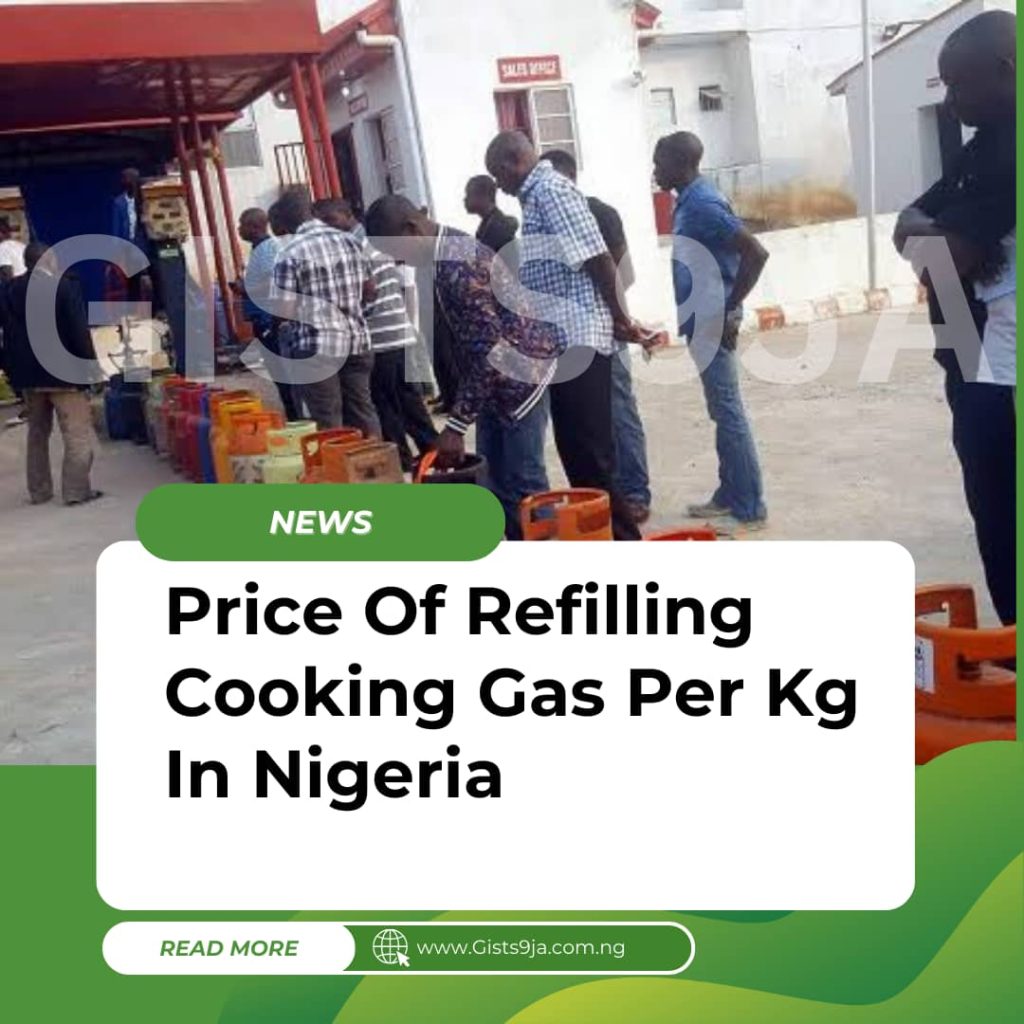
As of mid-February 2025, the cost of refilling Liquefied Petroleum Gas (LPG), commonly known as cooking gas, has surged across Nigeria.
In certain areas, prices have reached as high as ₦1,500 per kilogram, reflecting a broader trend of rising energy costs that continue to burden households nationwide.
Rising Costs and Current Market Trends
Recent market surveys reveal that the average price for refilling a 12.5kg LPG cylinder now stands at approximately ₦17,000 in several parts of the country, with Rivers State recording some of the highest prices. This represents a dramatic increase compared to previous months—up from ₦12,000 in July 2024 and ₦11,735 in January 2024.
Similarly, data from the National Bureau of Statistics (NBS) indicate that in October 2024, the cost of refilling a 5kg gas cylinder was ₦6,915.69, reflecting a 3.32% rise from ₦6,699.63 in September 2024. Year-over-year, this marks a staggering 51.58% increase from ₦4,562.51 in October 2023.
Regional Price Disparities
Cooking gas prices vary significantly across Nigeria’s states due to supply chain differences, distribution costs, and local market conditions. In October 2024, Borno State recorded the highest average price for a 5kg cylinder at ₦7,939.29, followed by Yobe at ₦7,580.00 and Benue at ₦7,578.00.
On the lower end of the spectrum, Katsina had the cheapest average price at ₦6,270.00, with Zamfara and Delta states following at ₦6,410.71 and ₦6,427.78, respectively.
For the 12.5kg cylinder, Rivers State had the highest reported price at ₦17,895.00, while Osun and Benue states recorded ₦17,739.06 and ₦17,731.25, respectively. The lowest prices were observed in Katsina (₦14,725.00), Nasarawa (₦15,390.55), and Adamawa (₦15,474.21).
Key Factors Driving the Price Hike
Several economic and logistical factors contribute to the continuous rise in cooking gas prices in Nigeria:
- High Dependence on Imports – More than 60% of Nigeria’s LPG supply is imported. This makes domestic prices highly susceptible to fluctuations in global oil prices and the volatility of the foreign exchange market. The depreciation of the naira further compounds the problem, increasing importation costs.
- Rising Inflation – Nigeria’s inflation rate, which hit 32.15% in August 2024, has led to increased costs across all sectors, including energy. As the purchasing power of the naira weakens, essential commodities such as cooking gas become more expensive.
- Logistical and Supply Chain Issues – Inefficiencies in Nigeria’s transportation network, alongside infrastructure challenges in gas distribution, result in higher costs for both suppliers and consumers. Additionally, security concerns in certain regions disrupt supply chains and contribute to price disparities.
The Impact on Households and Alternative Energy Sources
With the continuous rise in cooking gas prices, many Nigerian households are feeling the financial strain. The increased cost has forced some families to explore alternative cooking methods, such as charcoal, firewood, or kerosene. However, these alternatives come with their own challenges, including health risks, inefficiency, and environmental concerns.
Lower-income households are particularly affected, as the rising gas prices make it increasingly difficult to afford clean energy sources. This shift away from LPG could potentially hinder Nigeria’s transition to cleaner and more sustainable energy solutions.
Updated Price Breakdown by Cylinder Size
- 1kg Cylinder – ₦1,500
- 3kg Cylinder – ₦4,500
- 5kg Cylinder – ₦6,900
- 6kg Cylinder – ₦8,200
- 10kg Cylinder – ₦13,500
- 12.5kg Cylinder – ₦17,000
Conclusion
The sharp rise in cooking gas prices underscores the broader economic challenges facing Nigeria. Without intervention to stabilize prices—such as boosting local gas production, improving infrastructure, and addressing forex issues—Nigerian households may continue to struggle with energy costs.
Addressing these challenges will require coordinated efforts from the government, industry stakeholders, and policymakers to ensure that clean and affordable energy remains accessible to all.