The controversy surrounding the alleged reintroduction of daily ticket collection from commercial tricycle operators in Enugu State has raised an important question about governance, accountability and respect for official directives: Who is really in charge of Enugu State?
Governor Peter Ndubuisi Mbah is the elected governor of Enugu State, while Emmanuel Ekene Nnamani, as chairman of the Enugu State Internal Revenue Service (ESIRS), is responsible for carrying out duties within the agency’s mandate. However, the reported disagreement over ticket collection has left many residents and Keke operators questioning whether government directives are being implemented as announced.
According to accounts circulating among affected operators, Governor Mbah had directed the immediate suspension of daily levies and ticket collection for commercial tricycle operators across the state. The directive was expected to provide relief to operators who depend on their daily earnings to support themselves and their families.
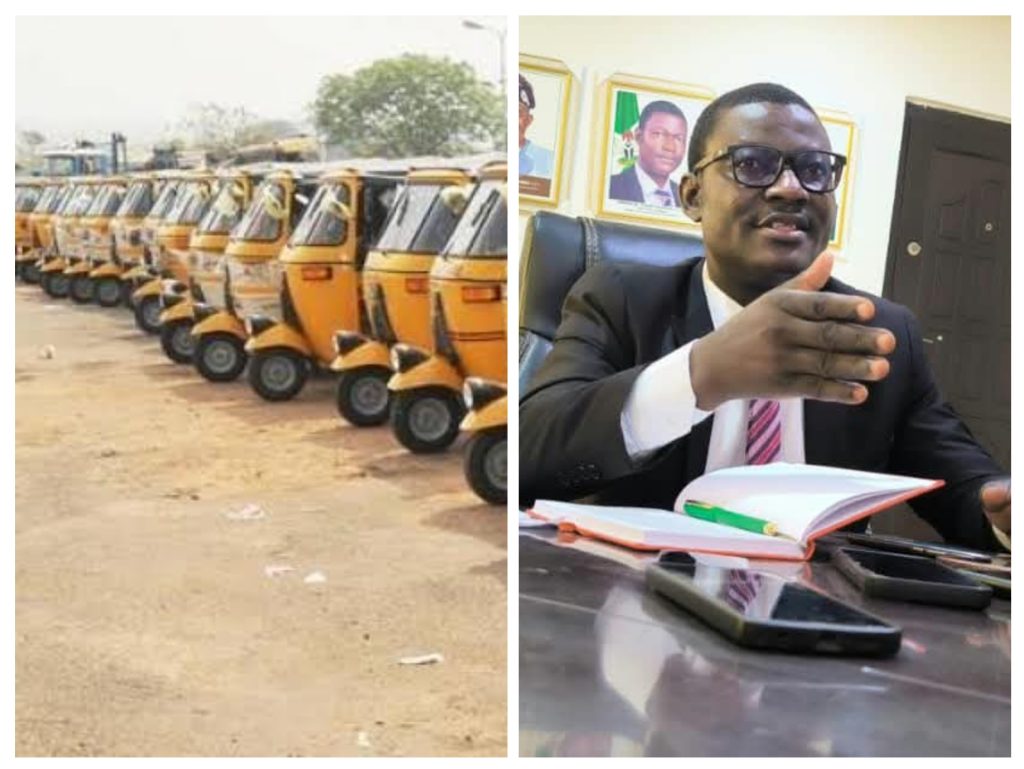
However, reports that operators are now being asked to pay ₦350 for ticketing have sparked confusion and anger. The situation has reportedly led to confrontations between Keke operators and task force personnel, with operators protesting the collection and two operators allegedly being detained at an MTD police station.
These developments raise serious questions that the state government needs to address urgently.
When a governor announces a policy intended to ease the burden on residents, the public naturally expects government agencies and enforcement officers to act in accordance with that directive.
If the suspension of daily Keke levies remains in force, why are operators reportedly being asked to pay ₦350? Who authorised the collection, and under what legal or administrative arrangement is it being enforced?
If there has been a new directive, clarification or modification to the earlier order, the government owes the public a clear explanation. If no such change has been made, the relevant authorities should explain why enforcement personnel are allegedly acting contrary to the announced policy.
The issue is not simply about ₦350. It is about consistency in government decisions and the ability of citizens to understand their obligations without fear of harassment or conflicting instructions.
Emmanuel Ekene Nnamani’s position as chairman of ESIRS makes the reported controversy particularly important because of the agency’s role in revenue administration.
However, the public deserves to know whether the reported ticket collection was authorised by the governor, approved through an appropriate administrative process or introduced by another relevant authority.
It would be premature to conclude that the ESIRS chairman deliberately overruled the governor without seeing the relevant directives and obtaining an official explanation from the parties involved.
Nevertheless, the questions remain legitimate: If the governor suspended the collection, what is the basis for demanding payment from Keke operators? And if the government has changed its position, why has that change not been clearly communicated to the people affected?
These are questions of accountability, not personal attacks.
The ₦350 Question: Is It a Tax, a Union Due or Both?
One important detail cannot be ignored. Following the controversy, reports published on October 20, 2026, quoted Nnamani as explaining that the revised ₦350 daily e-ticket covers local government levies and Amalgamated Keke Union dues, while the state government’s charges under the previous ₦750 arrangement had been removed. <Cite refs={[“turn859540search2″,”turn859540search6”]}/>
This explanation suggests that the disagreement may not simply be about whether the governor’s order has been reversed. It may also concern what exactly the governor abolished and which payments remain applicable.
Governor Mbah’s public announcement, as reported by the Enugu State Government on October 17, was that there would be no more tickets for Keke operators.
That wording understandably raises expectations among operators that they would no longer have to pay for the ticket. If the government intended to remove only its own share while retaining local government levies and union dues, that distinction needed to be communicated clearly from the beginning.
A policy meant to ease the burden on commercial transport operators should not leave them guessing about what they must pay, whom they must pay or whether refusal to pay could lead to confrontation with enforcement officers.
The government must therefore publish a clear breakdown of the ₦350 charge, identify the authorities legally entitled to collect each component and explain how the revised arrangement complies with the governor’s announcement.
Keke Operators Should Not Become Victims of Conflicting Instructions
Commercial tricycle operators are important contributors to Enugu’s economy. They transport workers, students, traders and other residents while using their daily earnings to provide for their families.
For many operators, the cost of fuel, maintenance, spare parts and household expenses already consumes a substantial portion of their income. Any additional daily charge, however small it may appear to officials, matters when it is multiplied across several working days.
This is why the reported protest and alleged detention of two operators at an MTD police station deserve proper investigation. The circumstances surrounding the incident should be established, including why the operators were detained and whether the enforcement officers acted within the law.
Neither government officials nor transport operators should be encouraged to take the law into their own hands. Authorities should resolve disputes through clear communication, lawful enforcement and dialogue rather than confrontations that disrupt transportation and livelihoods.
Who Is Really in Charge?
The question of whether Peter Mbah or Emmanuel Ekene Nnamani is the governor of Enugu State may be rhetorical, but it captures the frustration that conflicting interpretations of a government policy can create.
Peter Mbah is the governor. Nnamani heads the state’s revenue service. The two positions have different responsibilities, and the revenue agency is expected to operate within the law and applicable government policies.
The real issue, therefore, is not whether the ESIRS chairman is attempting to become governor. There is currently no established evidence to support such a conclusion. The issue is whether the implementation of the ticketing arrangement reflects the governor’s publicly announced policy and whether residents have received adequate clarification.
If the ₦350 charge represents only lawful local government levies and union dues, the government should demonstrate this transparently. If any part of the collection contradicts an existing directive or lacks legal authorisation, it should be reviewed and corrected.
Governor Mbah should also ensure that his directives are communicated in precise terms, monitored after implementation and enforced consistently across the state.
A government cannot expect citizens to understand a policy when its public announcement and the actions of enforcement personnel appear to tell different stories.
Conclusion: Enugu Needs Clarity, Not Confusion
The controversy over Keke ticketing presents the Enugu State Government with an opportunity to demonstrate that public policies are more than announcements made at public events.
The immediate priority should be to clarify the status of the ₦350 payment, investigate the reported confrontation, establish the circumstances of the alleged detention of the two operators and ensure that all collections have a clear legal basis.
The government should also establish a reliable complaint channel where Keke operators can report disputed charges without fear of intimidation.
Ultimately, the question is not whether Emmanuel Ekene Nnamani should be governor instead of Peter Mbah. It is whether the institutions under the governor’s administration are implementing public policies in a way that citizens can understand and trust.
When a governor announces relief but citizens continue to face disputed payments, the government owes them answers.
Enugu residents deserve one clear policy, transparent implementation and accountability from every public official involved.
The people should not have to ask who is really in charge simply because they cannot tell which government directive to follow.