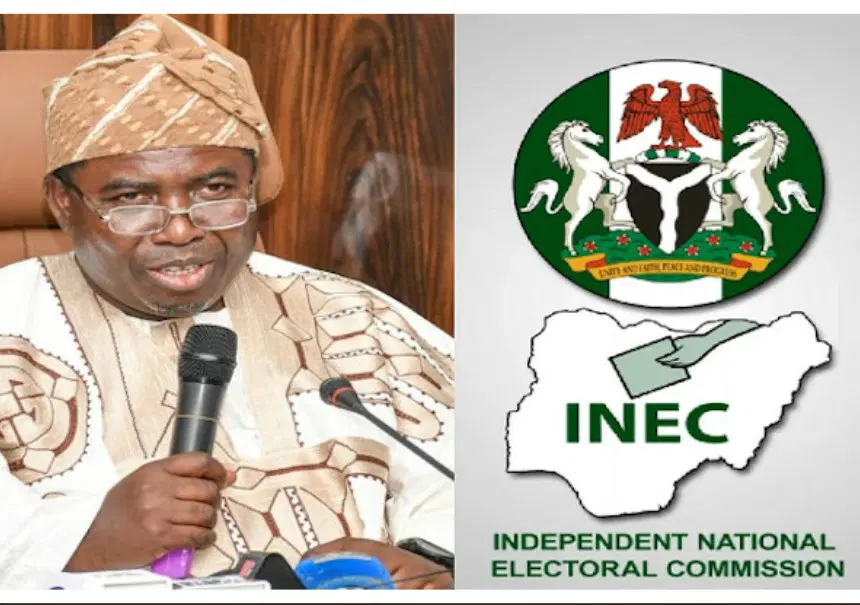
The Independent National Electoral Commission (INEC) has announced that political parties presenting candidates whose names were missing from official membership registers submitted to the commission will be barred from participating in the 2027 general elections.
The commission’s stance follows a September 24 landmark judgment by the Supreme Court, which affirmed the constitutionality of Sections 77(5), 77(6), and 77(7) of the Electoral Act 2026, upholding INEC’s revised timetable and operational schedule for the 2027 polls.
Speaking on Trust TV’s Daily Politics programme on Wednesday evening, INEC National Commissioner for Information and Voter Education, Mohammed Haruna, outlined the legal ramifications of the ruling.
Haruna confirmed that affected political parties will not be permitted to substitute disqualified candidates, arguing that political organizations should not benefit from statutory violations.
“It’s like you committed an offence. And then, you come and benefit from it. You remember cases that we had of some in Zamfara, you remember Plateau? The same thing,” Haruna stated. “The parties, because they did the wrong thing, they thought they could now steal through the candidates. And the law was very clear. Once you do that kind of thing, you cannot benefit from it. You are benefiting from it, if you are able to substitute a candidate.”
Haruna indicated that depending on the conclusion of ongoing reviews, several political parties risk losing the right to field candidates across multiple elective tiers.
“All the candidates, all the way to the Houses of Assembly, we interviewed them,” Haruna noted. “If their names are not on the party register, they were not members of the party at the time that they contested for those tickets.
“The commission explained that the brief delay in releasing its definitive position stemmed from the necessity of securing legal counsel after receiving the Certified True Copy (CTC) of the Supreme Court judgment. Haruna underscored the need for extreme caution, citing past instances where fraudulent judicial records were presented to electoral authorities.
“You can’t be too careful with these things because even when you see copies and they tell you it’s a CTC, it may be forged,” Haruna explained. “We’ve seen instances where people have even gone, have the audacity to forge a Supreme Court judgment. So, we have to be very careful to make sure that when you took us, we did put a lot of pressure and we were able to get it yesterday.”
INEC is expected to issue a formal, definitive pronouncement regarding the practical application of the Supreme Court ruling early next week.
Haruna indicated that depending on the conclusion of ongoing internal reviews, several political parties risk losing the right to field candidates across multiple elective tiers, including state Houses of Assembly.
The commission explained that the brief delay in releasing its definitive directive stemmed from the need to secure and analyze the Certified True Copy (CTC) of the Supreme Court judgment alongside official legal counsel. Haruna underscored the necessity of rigorous verification, citing past instances where fraudulent court documents were presented to electoral authorities.
INEC is expected to issue a formal, comprehensive pronouncement regarding the practical application of the Supreme Court judgment early next week.