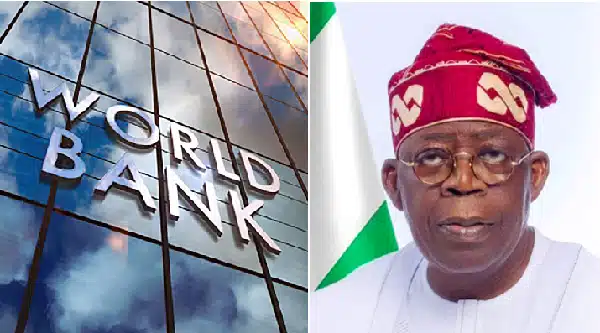
The World Bank and the Federal Government of Nigeria have cancelled $717.7 million in undisbursed intervention funding originally earmarked to support the recovery and reform of Nigeria’s troubled electricity sector.
The cancellation followed a formal request by the Nigerian government and a joint agreement by both parties to discontinue financing under the Power Sector Recovery Performance-Based Operation programme.
According to documents obtained from the World Bank, the decision was driven by changing realities within the electricity sector and the inability to achieve several critical reform milestones tied to the programme.
The development effectively ends the remaining phase of a broader $1.52 billion electricity sector recovery initiative designed to improve power supply, restore financial stability and reduce the growing fiscal burden of the sector on government finances.
“The restructuring will result in the cancellation of the entire undisbursed balance in the amount of $717.7 million equivalent, and no further disbursements will be made under the programme following approval of this restructuring,” the World Bank stated.
The Federal Government had introduced the Power Sector Recovery Programme as a long-term framework aimed at addressing deep-rooted challenges in Nigeria’s electricity industry.
The initiative included plans to gradually eliminate tariff shortfalls, improve operational efficiency among electricity institutions and strengthen regulatory oversight, transparency and accountability across the sector.
The original financing package, valued at approximately $752.5 million, received approval on June 23, 2020. The intervention was expected to improve the reliability of electricity supply, strengthen financial sustainability and enhance accountability throughout Nigeria’s electricity value chain.
Following what was described as initial progress under the programme, the World Bank later approved additional financing of about $763.5 million on June 9, 2023, to deepen ongoing reforms and support a new implementation phase.
The additional financing became effective on June 19, 2024, while the programme’s closing date was extended to June 30, 2027.
Combined, both financing arrangements amounted to roughly $1.52 billion.
However, despite the earlier phase reportedly recording substantial achievements and disbursing most of its allocated funds, the additional financing component struggled to meet major reform requirements set by the World Bank.
The failure to achieve those benchmarks reportedly resulted in minimal disbursement before the eventual cancellation of the remaining funds.
The World Bank noted that Nigeria’s power sector continues to battle severe structural problems, including weak cost recovery systems, high technical losses and widespread commercial inefficiencies.
According to the bank, these challenges have created a persistent gap between operational costs and actual revenues generated within the sector.
Despite years of reforms, policy adjustments and multiple rounds of financial intervention, Nigeria’s electricity sector remains under heavy financial and operational pressure, with millions of citizens and businesses still grappling with unreliable power supply.