Online publishers and editors in Enugu State have been urged to prioritise accuracy, professionalism, fact-checking and accountability in their reportage ahead of the 2027 general elections.
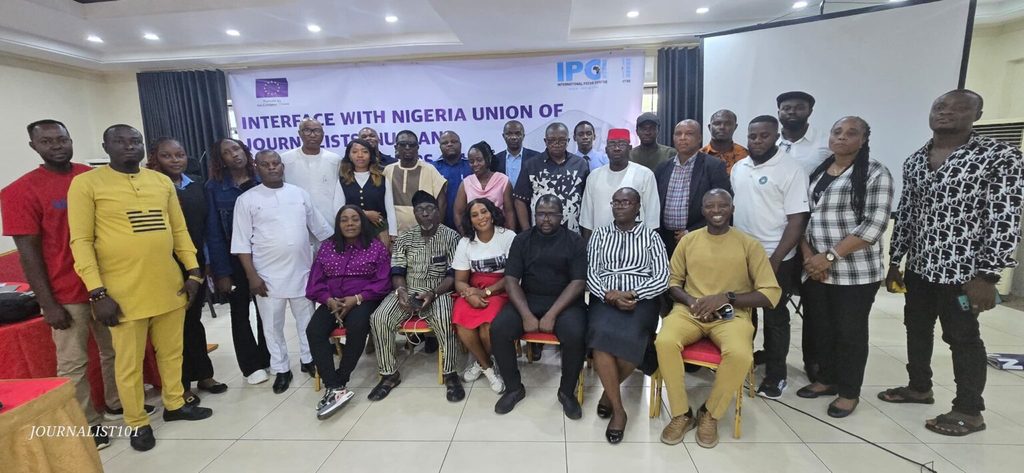
The call was made during an Interface and Capacity Building Workshop for Online Publishers on Professional and Accountability Journalism, organised to strengthen the capacity of digital media practitioners and promote responsible reporting as Nigeria approaches another election cycle.
Stella Nwofia, Programme Manager, who represented the Executive Director of the International Press Centre (IPC), Lanre Arogundade, acknowledged the importance of the training, noting that the growing pressure to publish breaking news and attract online visibility sometimes undermines journalistic accuracy.
Nwofia observed that many online publishers in Enugu were experienced journalists who had moved from established media organisations to establish their own platforms, making continuous professional development necessary.
She expressed optimism that the workshop would improve participants’ professional capacity, create greater opportunities for online publishers in Enugu and enhance their visibility in the national media landscape.
She also assured the organisers that participants would take the lessons seriously and ensure that the knowledge acquired was shared with their staff and incorporated into their newsroom practices.
Describing Enugu online media practitioners as committed and experienced professionals, Nwofia emphasised the importance of maintaining transparency and responsibility in journalism.
Journalists Urged to Hold Public Officials Accountable
In a presentation titled “2027 General Elections in the Context of Democratic and Accountability Reporting: Scanning the Electoral Environment and Reporting Citizens’ Priority Concerns,” Professor Ifeoma Dunu reminded journalists of their critical responsibility in protecting democracy through credible information and holding elected public officials accountable.
Dunu described the media as the eyes, ears and voice of ordinary citizens, stressing that information published by journalists is often accepted as the truth and must therefore be handled with the highest level of responsibility.
She emphasised that journalists must go beyond reporting political statements and ensure that their coverage reflects citizens’ concerns, democratic values and the performance of public officials.
IPC Factchecker Warns Against Electoral Misinformation
Similarly, Olusola Oludiran, a fact-checker with the Nigerian Democratic Report (NDR) and the International Press Centre (IPC), urged media organisations to integrate fact-checking into their news gathering and reporting processes.
In his presentation titled “Integrating Fact-Checking for Democratic and Accountability Reporting,” Oludiran said fact-checking was essential to strengthening democratic accountability, restoring public trust and combating misinformation and disinformation.
He explained that journalism goes beyond reproducing statements made by public officials, noting that media practitioners have a responsibility to establish whether such claims are supported by verifiable evidence.
According to him, journalists must monitor the exercise of public power, provide citizens with accurate information and scrutinise government policies, decisions and performance.
Oludiran identified misinformation, disinformation and malinformation as major forms of information disorder threatening credible public discourse.
He explained that misinformation involves false information shared without the intention to deceive, while disinformation refers to deliberately fabricated or manipulated information intended to mislead. Malinformation, on the other hand, involves using genuine information maliciously or outside its original context to cause harm.
He warned that electoral misinformation could discourage voter participation, weaken public confidence in election results, undermine democratic institutions and trigger violence.
Among the common forms of electoral disinformation he identified were fabricated news reports, manipulated photographs, recycled videos, AI-generated images, deepfake videos, false endorsements and fake election results.
AI-Generated Content Poses New Threat to Elections
Addressing the growing influence of Artificial Intelligence, Oludiran warned that generative AI tools had made it easier, faster and cheaper to produce convincing fake texts, images, audio recordings and videos capable of misleading voters and damaging political candidates.
He therefore urged journalists to strengthen their verification skills, particularly when reporting political developments and handling viral social media content.
He outlined important verification procedures, including tracing the original source of information, examining available evidence, consulting official records, contacting relevant stakeholders and deploying digital verification tools.
These tools, he noted, include reverse image searches, metadata analysis and AI-detection applications.
Oludiran also advised journalists to prioritise authoritative, independent, named and verifiable sources rather than depending on anonymous social media accounts or single-source claims.
He stressed that fact-checking conclusions must be guided by evidence rather than the popularity or virality of a particular claim.
NUJ Online Chapel Pledges Improved Journalism Standards
Earlier, the Chairman of the Corporate Online Chapel of the Nigeria Union of Journalists (NUJ), Enugu State Council, Clinton Umeh, pledged that online publishers in the state would translate the lessons from the workshop into improved newsroom practices.
Umeh described the initiative as an important intervention for independent online media practitioners, many of whom had acquired years of professional experience in established media organisations before setting up their own platforms.
He acknowledged that competition for speed and visibility in digital publishing sometimes puts pressure on journalists to break stories first, potentially compromising accuracy.
According to him, the training would help participants strengthen their existing knowledge, improve their professional output and enhance the visibility of Enugu-based online publishers.
Umeh particularly welcomed the opportunity for online media practitioners in Enugu to benefit from professional exposure and networking opportunities often available to publishers in major media centres such as Lagos and Abuja.
He assured the organisers that participants would apply the knowledge gained in their respective organisations and extend the benefits to their employees.
The NUJ chapel chairman further explained that independent online publishers largely depend on their capacity and productivity to sustain their businesses, making professional competence and commitment essential.
He called for the continuation of similar capacity-building initiatives, noting that interactions with media practitioners across the country would encourage networking, collaboration and professional development.
The workshop forms part of broader efforts to strengthen online journalism, promote accountability reporting and encourage responsible media practices ahead of Nigeria’s 2027 general elections.