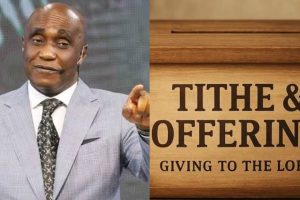
Apostle Harrison Ayintete has defended the practice of collecting 10% tithes from church members, arguing that the contributions are necessary to meet the financial demands of running a church.
The cleric maintained that churches have bills to pay and facilities to maintain, insisting that members who identify with a particular church must comply with its financial requirements.
Speaking on the subject, Ayintete argued that churches could collectively agree on a percentage of members’ income to fund their activities, noting that the early church also practised collective giving.
He said, “There is no scripture that says A church cannot give twenty percent or give thirty percent. If the early church could come together, And say we are selling our land and we are giving everything. So we can also come together and say we are doing ten percent.”
The apostle urged those debating the biblical basis of tithing to look beyond discussions about Melchizedek and the Old Testament, suggesting that the issue could also be viewed as a financial arrangement within an organised institution.
‘We have a church to run’
Explaining the financial demands churches face, Ayintete pointed to the cost of purchasing diesel, microphones and other items required for church operations.
“We have a church to run, yes or no? There is diesel to buy, yes or no? There’s microphone to buy, yes or no?” he asked.
He further explained that his church had agreed to collect 10 per cent of each member’s income to cover its financial needs.
“As a church we have said that ten percent of individual members’ income is what we cater to what we need in this church. And you must give it. If you say you are a member, you give it,” he said.
Cleric insists members must comply
Ayintete reiterated that the tithe was a financial requirement established by his church, rather than an issue that should be debated solely through biblical references.
“Leave Melchizedek. Leave Old Testament. Na the levy we dey collect be this for this particular institution. If you say you are with us, you give it,” he concluded.